Search

findingphilblog

In search of my grandfather's past … and maybe a book deal

Month

April 2006

Aunt Mary V

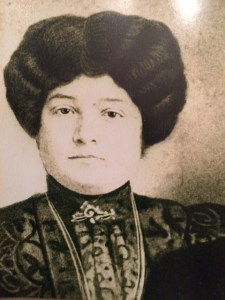
MaryVThe closest I ever came to anyone connected with the events of this story is the fetal me, in my mom’s belly, when she visited Aunt Mary V.

That’s what everyone called Mary Venezia, who, as I now know, was born Maria Giuseppa Venezia in Pittsburgh, PA on August 5, 1905.

What my mom remembered of her was spotty. She was a tiny, tiny woman who always smelled like lavender. She lived alone the top room of a boarding house-style living facility. She died because some doctor convinced her he could help her retain her mobility (and therefore stay in this independent living arrangement). She died on the operating table in September 1977.

She was a prolific letter-writer and had pen pals from all over the world, many of them children who’d stayed at the Fresh Air Home. She wore a pink peridot ring and, at some point, someone brought her a lovely cameo back from Italy. I have them both , stored with the only baby picture we ever had of any of the Venezia children. I carried it around a lot in my childhood, and one day it went through the wash. Thank god for old paper made from rags or it would have been lost forever.

The library had a history of the Fresh Air Home, published by its benefactors. It included names of notable patients. Interestingly, it noted that, unlike many of the patients, she was a ward of Allegheny County. Most of the other children were placed there by their families. Yet, she was among them, and listed as having tuberculosis of the hip and spine. The Pittsburgh Press article I came across mentioned that Mary had been brought into the Fresh Air Home on a stretcher. She’d spent three years in a body cast.

After learning all this, I’m even more sad that I never met this fiercely independent lady. No wonder she fought so hard to stay on her feet. She figured it was better to go down swinging than become reliant on other people. I respect her even more for that decision.
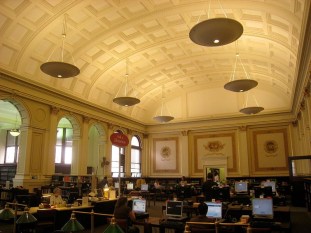
The Carnegie Library is Awesome

That’s the title of my post because, well, it is.

800px-Carnegie_Library_of_Pittsburgh_-_IMG_1162I just got back from an all-day research binge in the library’s Pennsylvania Room.
I have a stack of census forms, a sheaf of photos and a whole lot of answers.

The biggest asset they have is access to ancestry.com, which I’ve been dying to join for ages.

The first thing I did was dig through their Census records. Thank goodness I’d found that will because I knew to search and verify information by everyone’s Italian name, rather than the Americanized version. Jackpot in the 1910 Census!

I now know that when my grandpa was 3, he lived with his mother, father, sister, brother and uncle Pasquale (who was listed as a boarder. Interesting.) on St. Andrews Street in East Liberty. I looked it up on Google Maps, but it doesn’t look like it exists anymore. But using Our Lady Help of Christians as a beacon, I was able to trace the boarders of his early life. The church is within walking distance of their house. Enterprise Street, where Saverina eventually moved, is only a few blocks over in the opposite direction.

This record has Francesco doing odd jobs, so I wonder if he’d been laid off. Maybe he was a Francesco was working for himself, kind of a freelance tailor?

I’d pictured them living in a walk-up apartment. Not real big. Maybe even something like this.  But the address seems to indicate a house-house, rather than an apartment building where they might share a few rooms. All of their neighbors have different house numbers. Was it possible they lived in their own home, albeit a rented one? Francesco and Saverina had been married for 6 years. She’d had three children and three live births.

It made me smile to see the five of them and their uncle together. It’s the first real mental image I’d been able to conjure of my grandfather belonging to his birth family. And in this record, they really were.

Here’s a quick run-down of my other discoveries:

  • Cesare and Pasquale Brescia, Saverina’s brothers, were part of a group of people known as “birds of passage.” They sailed back and forth between Italy without becoming citizens. I found records indicating that Cesare, the brother who’d come with his newlywed sister to America, would return to Italy in 1907 and 1913. He’d tried to come in 1912, but had come down with the dreaded eye disease trachoma and had been turned back. Pasquale, who’d also come in 1904, left in 1913 and returned in 1914. How and when Ottavio, the uncle from the Guardianship  papers, came to the US remains a mystery
  •  Loads and loads of pictures from the ‘Italians’ picture collection. I now have a pretty good visual idea of what it was like to walk through the streets of East Liberty, how kids and adults dressed, what types of buildings and landmarks made up Phil’s life.
  • Information about the Sewickley Fresh Air Home, where my great-aunt Mary lived much of her life. I’ll write a separate post about her later.
  • Sanborn Fire Maps. Oh my god, I’m in love with them. Big digital maps that are overlaid. You can find all the old streets, see old buildings that were torn down, who owned them. And the best part about them is you can access them outside the library.

The Hall of Records: Marriage edition

I’m at a bit of a dead end with the money angle. But, I realized I was missing another huge trove of records. Marriage licenses.

SeverinaSo, early this morning, I trundled into the Marriage License Bureau to start my digging there.

The woman suggested I start with the bride’s name, so down came the big book of Bs and I turned to 1904, the year (I presumed) Francesco and Severina had been married. But the search came up empty. I checked the year before and after, just to be sure. Nothing. Which leads me to believe that they’d probably gotten married in Italy and come over here.

I figured while I was in the Bs, I’d look for Raymond and Myrtle Brenckle, my adoptive great-grandparents. As expected, there they were. Raymond Brenckle and Myrtle Lager. I made a photocopy. Everyone’s coming over to our house for Easter, so I figured this would add to the show-and-tell fun.

As I stood there, trying to figure out where to look next, from the corners of my brain, a tiny memory fluttered up. Severina had either died of the flu in the pandemic, or she’d died in childbirth. There may have been a stepfather.

If there was a stepfather, there had to have been a marriage, right?

The will I’d found indicated Francesco had died in June 1915, so I started with July.

My heart dropped when I reached January 1916.

“Severina Brescia and Michele Natale,” I whispered to myself. “You’ve got to be kidding me. Six months? She waited six months?! Francesco’s body was barely cold!”

From “beloved wife” and widow to new bride in 180 days.

I know it’s wrong to judge people of the past by today’s morality and mores. But a part of me is really angry at her. How could she put her kids through that? My poor grandpa! What’s more, all of a sudden this vague notion of my great-grandmother dying in childbirth has suddenly taken on a whole lot more relevance. Was there really a baby?

I copied the certificate and walked back across the street in a haze.

“She waited six months!” I shouted into the phone when I relayed my news to my parents during my walk back. “Six months and she married some new guy. Looks like the neighbor. Their addresses were only a few digits apart. I can’t believe it.”

“It was 1916, honey,” my mom said. “It was probably that or starve.”

“I know,” I said. “But she had money. Francesco left her enough to buy a house, for pete’s sake!”

“How far do you think it went with three kids?” my mom asked gently.

I sighed. She was right and I felt bad. Bad for judging my great-grandma for making a choice I would never have to consider. She was a poor woman with no education. Hell, women didn’t even have the right to vote yet. I shouldn’t be so hard on her.

Later, I calmed down and really took a good look at the material. They’d applied for the marriage license at Christmastime 1915 and had gotten married at a church called Our Lady Help of Christians, which was the same church that issued Grandpa Phil’s baptismal certificate. A quick search of the archives on the Diocese of Pittsburgh website showed me this had been the center of Italian immigrant faith life in East Liberty. The church was still standing, but the congregation had been absorbed a decade ago.

I’d seen that they’d been neighbors, so I tried to find Enterprise Street on Google. It still existed, but it seemed the house didn’t.

Fading to ghosts.

Where do I go from here?

Blog at WordPress.com.

Up ↑