Search

findingphilblog

In search of my grandfather's past … and maybe a book deal

Category

Discoveries

The Carnegie Library is Awesome

That’s the title of my post because, well, it is.
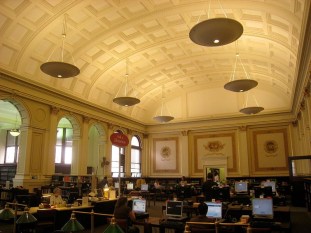
800px-Carnegie_Library_of_Pittsburgh_-_IMG_1162I just got back from an all-day research binge in the library’s Pennsylvania Room.

I have a stack of census forms, a sheaf of photos and a whole lot of answers.

The biggest asset they have is access to ancestry.com, which I’ve been dying to join for ages.

The first thing I did was dig through their Census records. Thank goodness I’d found that will because I knew to search and verify information by everyone’s Italian name, rather than the Americanized version. Jackpot in the 1910 Census!

I now know that when my grandpa was 3, he lived with his mother, father, sister, brother and uncle Pasquale (who was listed as a boarder. Interesting.) on St. Andrews Street in East Liberty. I looked it up on Google Maps, but it doesn’t look like it exists anymore. But using Our Lady Help of Christians as a beacon, I was able to trace the boarders of his early life. The church is within walking distance of their house. Enterprise Street, where Saverina eventually moved, is only a few blocks over in the opposite direction.

This record has Francesco doing odd jobs, so I wonder if he’d been laid off. Maybe he was a Francesco was working for himself, kind of a freelance tailor?

I’d pictured them living in a walk-up apartment. Not real big. Maybe even something like this.  But the address seems to indicate a house-house, rather than an apartment building where they might share a few rooms. All of their neighbors have different house numbers. Was it possible they lived in their own home, albeit a rented one? Francesco and Saverina had been married for 6 years. She’d had three children and three live births.

It made me smile to see the five of them and their uncle together. It’s the first real mental image I’d been able to conjure of my grandfather belonging to his birth family. And in this record, they really were.

Here’s a quick run-down of my other discoveries:

  • Cesare and Pasquale Brescia, Saverina’s brothers, were part of a group of people known as “birds of passage.” They sailed back and forth between Italy without becoming citizens. I found records indicating that Cesare, the brother who’d come with his newlywed sister to America, would return to Italy in 1907 and 1913. He’d tried to come in 1912, but had come down with the dreaded eye disease trachoma and had been turned back. Pasquale, who’d also come in 1904, left in 1913 and returned in 1914. How and when Ottavio, the uncle from the Guardianship  papers, came to the US remains a mystery
  •  Loads and loads of pictures from the ‘Italians’ picture collection. I now have a pretty good visual idea of what it was like to walk through the streets of East Liberty, how kids and adults dressed, what types of buildings and landmarks made up Phil’s life.
  • Information about the Sewickley Fresh Air Home, where my great-aunt Mary lived much of her life. I’ll write a separate post about her later.
  • Sanborn Fire Maps. Oh my god, I’m in love with them. Big digital maps that are overlaid. You can find all the old streets, see old buildings that were torn down, who owned them. And the best part about them is you can access them outside the library.
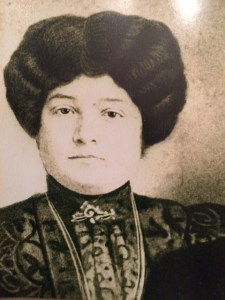
The Hall of Records: Marriage edition

I’m at a bit of a dead end with the money angle. But, I realized I was missing another huge trove of records. Marriage licenses.

SeverinaSo, early this morning, I trundled into the Marriage License Bureau to start my digging there.
The woman suggested I start with the bride’s name, so down came the big book of Bs and I turned to 1904, the year (I presumed) Francesco and Severina had been married. But the search came up empty. I checked the year before and after, just to be sure. Nothing. Which leads me to believe that they’d probably gotten married in Italy and come over here.

I figured while I was in the Bs, I’d look for Raymond and Myrtle Brenckle, my adoptive great-grandparents. As expected, there they were. Raymond Brenckle and Myrtle Lager. I made a photocopy. Everyone’s coming over to our house for Easter, so I figured this would add to the show-and-tell fun.

As I stood there, trying to figure out where to look next, from the corners of my brain, a tiny memory fluttered up. Severina had either died of the flu in the pandemic, or she’d died in childbirth. There may have been a stepfather.

If there was a stepfather, there had to have been a marriage, right?

The will I’d found indicated Francesco had died in June 1915, so I started with July.

My heart dropped when I reached January 1916.

“Severina Brescia and Michele Natale,” I whispered to myself. “You’ve got to be kidding me. Six months? She waited six months?! Francesco’s body was barely cold!”

From “beloved wife” and widow to new bride in 180 days.

I know it’s wrong to judge people of the past by today’s morality and mores. But a part of me is really angry at her. How could she put her kids through that? My poor grandpa! What’s more, all of a sudden this vague notion of my great-grandmother dying in childbirth has suddenly taken on a whole lot more relevance. Was there really a baby?

I copied the certificate and walked back across the street in a haze.

“She waited six months!” I shouted into the phone when I relayed my news to my parents during my walk back. “Six months and she married some new guy. Looks like the neighbor. Their addresses were only a few digits apart. I can’t believe it.”

“It was 1916, honey,” my mom said. “It was probably that or starve.”

“I know,” I said. “But she had money. Francesco left her enough to buy a house, for pete’s sake!”

“How far do you think it went with three kids?” my mom asked gently.

I sighed. She was right and I felt bad. Bad for judging my great-grandma for making a choice I would never have to consider. She was a poor woman with no education. Hell, women didn’t even have the right to vote yet. I shouldn’t be so hard on her.

Later, I calmed down and really took a good look at the material. They’d applied for the marriage license at Christmastime 1915 and had gotten married at a church called Our Lady Help of Christians, which was the same church that issued Grandpa Phil’s baptismal certificate. A quick search of the archives on the Diocese of Pittsburgh website showed me this had been the center of Italian immigrant faith life in East Liberty. The church was still standing, but the congregation had been absorbed a decade ago.

I’d seen that they’d been neighbors, so I tried to find Enterprise Street on Google. It still existed, but it seemed the house didn’t.

Fading to ghosts.

Where do I go from here?

A hometown — Finally!

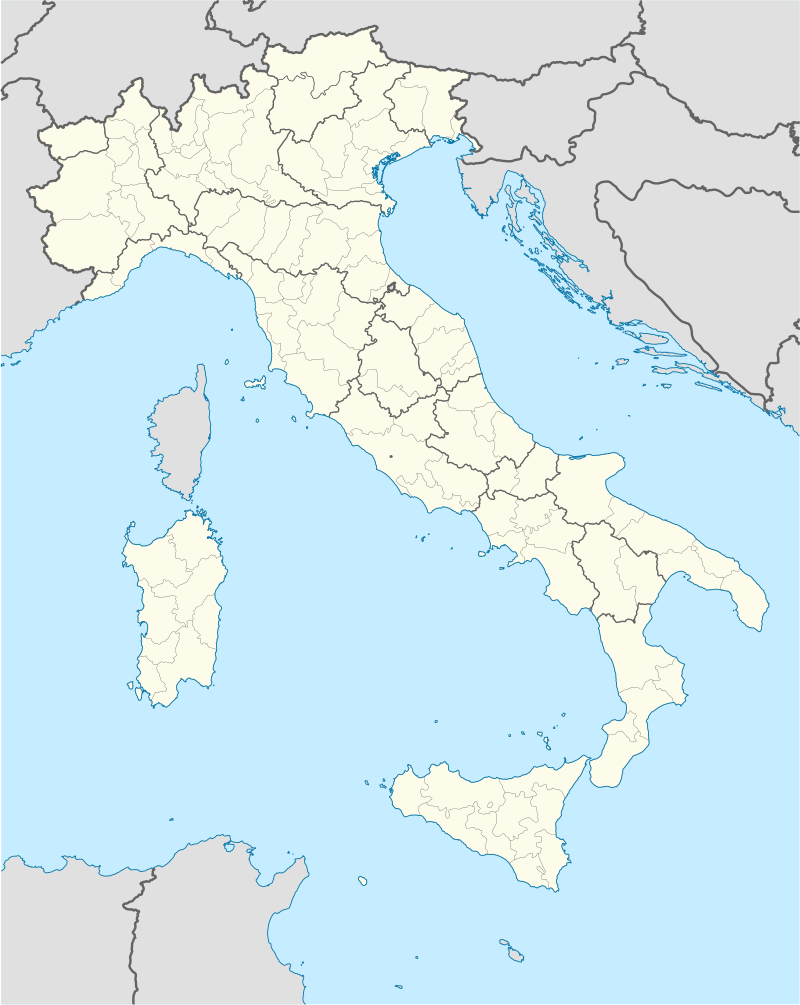
800px-Italy_provincial_location_map.svgWhen I was about 10, I went to the Statue of Liberty. I was desperate to visit “the place where my ancestors came,” but Ellis Island was years from being renovated. So, a picture of me at the base of the Great Lady in a silly foam crown had to do.

I had no idea if it was true that my ancestors came through Ellis Island or not, but now I know that it was.

Turns out Ellis Island’s search is free. And, well, I just may have burned the two hours waiting for my county commissioners meeting digging around.

I’m pretty sure I found him. August 4, 1904. That’s when Francesco landed in America with his wife and her brother, Cesare. But I can’t figure out why Saverina’s name is recorded as Teresa Pasqualina. She’s 19. He’s 30. Wowza. I guess the guys in our family always did dig younger chicks. My mom’s seven years younger than my dad. I’m 8 years younger than my boyfriend. Grammy was eight years younger than Grandpa Phil.

Francesco? Dates totally check out. Cesare Brescia? Yup. If I go by the age of the Trust Administration document and do some math, this Cesare is the right age, right name. If these are definitely my people, it means that my father’s family is from a place called Catanzaro. I looked it up. It’s basically in the arch of the boot of Italy, a costal town with a rugged inland. It looks amazing. I already want to visit.

It just feels right. The manifest said Francesco was a tailor, which is what I remember Grammy telling me. He was headed to Pittsburgh. But to is own house. Hmm. And it seems to indicate that he was in the US from 1889 to 1904. U.S. Citizen Discharge on the Pier is stamped over both his and her names. So, were they both citizens already? If they’re coming back from Italy, did he marry her here or there? Meet her here or there?

There’s also the name of the ship. The Konigin Luise. A picture I can buy. I stare at it for a long time. I wonder. Was their passage like the people in steerage that I saw in “Titanic”? Was it worse? Better?

I call my parents and my dad gets on the phone.

“Catenzaro,” I said. “That’s where we’re from.”

My dad can’t believe it. He traveled through Italy with a friend after he got out of Vietnam. He said he must have come within miles of the place.

I ask him again about Francesco’s will. He said he never heard his father talk about getting money from his father. Of all the questions that are lingering out there, this is the one that bothers me the most. I’m a journalist. What’s the first rule of journalism? Follow the money.

My first discovery

Guardianship1 My mind is reeling. When the man in the Register of Wills Office returned, this is what he brought. It’s a guardianship document. And it cracked open my world.

There my great-grandparents names. Francesco Venezia and Severina Brescia. Frank and Sarah were obvious Americanizations. Severina had at least three brothers. Ottavio, Cesare and Pasquale. I had contemplated her life a thousand times, but for some crazy reason, I never thought of her as part of a real family. My family. But here they were. A family of four (more?). Pasquale was dead and he’d left Ottavio, my grandfather (Phil), great-uncle (Joe) and great-uncle (Mary) $1,500 to split.

I did a quick calculation in an online calculator. That’s about $4,000 in today’s money. Not a bad chunk of change for a bunch of kids. Which explains why they were being set up with trusts.

My pal in the records office is as excited as I am. He tells me to fill out another form and he’ll see if it was paid out.

“Actually,” he says. “Check the Vs. Maybe your great-grandfather had a will, too.”

Adrenaline pumping, I flip pages. Bingo.

“He had a will?” I can feel my mouth hanging open. “My immigrant great-grandfather had a will?”

“Seems so,” he says. “Fill out another card. I’ll be back in a few minutes.”

Few minutes. Ha! It takes an eternity before he brings a few photocopies of Pasquale’s bequest to his family and a small, rectangular envelope. Francesco’s name is written in that perfect cursive I’d always wished I could write.

“I, Francesco Venezia, of the city of Pittsburgh and the State of Pennsylvania …” My eyes skitter over the words. “To my beloved wife .. THREE bank accounts… To my beloved daughter and beloved sons, I leave the remainder in trust…”

My eyes cloud over.  He left them money. He died and he thought ahead enough to save for the day he knew he couldn’t be there. He left his wife money and enough for his children later.

“How much is 13,000 lira,” I ask to no one in particular.

My records sherpa smiles and shakes his head.

And dangitall. My phone rings. Time to go to work.

I stay long enough to get photo copies and I call my parents, breathless, on the walk back over to the courthouse.

When I get back to the newsroom I can’t resist running a quick calculation. In 1915, the year the will was drafted, 13,000 lira was about $2,000. Enough to buy a small home. I carry those pages with me all day long and a single thought has formed in my head.

“He was loved. No matter what happened after, Grandpa, Joe, Mary. They were loved.”

Blog at WordPress.com.

Up ↑