Search

findingphilblog

In search of my grandfather's past … and maybe a book deal

Category

The Search

The final frontier

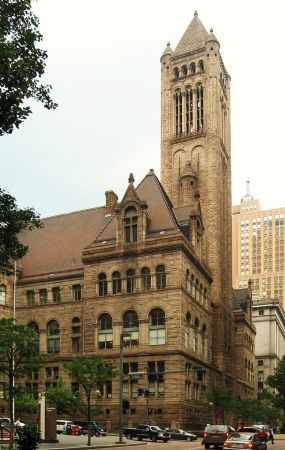
800px-AlleghenyCountyCourthouseThroughout this journey, a single primary source document remained shrouded in secrecy: Phil’s adoption file.

The idea of searching for it ebbed and flowed. I’d been told it would likely contain nothing — if it existed at all. More than 100 years have passed since Phil, Joe and Mary entered Allegheny County’s care. Warehouses flood. Paper folders get mislaid. Don’t get my hopes up, I was told. The “file” could hold no more than a single paper with his name on it.

I know better, by now, than to trust supposition. And, honestly, the folks at the Office of Children, Youth and Family and the Clerk of the Orphan’s Court could not have been more helpful.

This spring, I decided to cross the legal Rubicon. No matter what was inside, be it reams of paperwork or a single card, it would be an answer.  

Technically, my dad had to make the request. As Phil’s living son, he has standing before the court. So, together, we wrote the letters, collected the documents (including a certified copy of Phil’s death record) and sent them off to Pittsburgh. 

In mid-September, the Clerk of the Orphan’s Court presented our plea. Judge Lawrence O’Toole affirmed Dad’s standing and appointed Children, Youth and Families to act as our search agent.

What, if anything, would they find?

The answer came today: nothing less than the final pieces confirming the shape of this decade-long jigsaw puzzle.

The timeline is accurate. Assumptions were proven out by the legal paper trail and augmented by the amazing Christmas letters and the diligence of the city’s journalistic community.

The half-remembered boogyman, woven ominously through time as The Uncle in Ohio has a name. Ottavio Brescia. So do his two accomplices. Mike Natale. Pasquale Brescia.

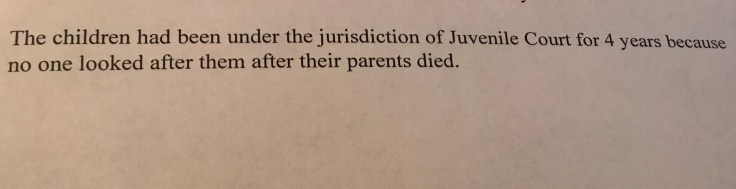
There were only a handful of documents in Phil’s file, but they were good: The adoption decree and the Brenckles’ petition to adopt the boys. Law (still!) seals the file and prevents direct photocopying. However, our search agent was kind enough to hand-copy it all and provide a summary.

The final sentence punches me in the gut. 
img_8761.jpg

 Oh, people “looked after” them. Just not well. Not with love. Their relatives watched as three beautiful children, who’d lost the two most important people in their lives, starved, sickened and almost died. These men saw dollar sign-printed punching bags. 

To be sure, there are sacks of waste wrapped in skin who do that, and worse, to children living on our street, going to school with our kids, standing in line next to you at the gas pump today.

This journey with my grandfather gifted me invaluable lessons. Chief among them is the urgent need to protect all children and improve the nation’s foster care and adoption system which, in many communities, fails badly and often. 

In terms of sleuthing, this is the end of the road. The mystery I carried from childhood through middle age has been solved. The names have not been changed, here anyway, to protect the guilty or the innocent. 

Here’s another thing I’ve learned, thanks to my writer’s critique group and a raft of writing manuals. The truth may be stranger than fiction, but it won’t always make a great novel. 

So, that’s the next horizon. The mystery is replaced by this riddle: How to write this incredibly personal story well enough so others believe its value? So much so that, in turn, will help the rest of the world see and love this long-ago, almost-lost little boy. 

Music, again, fills my soul with hope. In the movie Coco, little Miguel journeys to the Land of the Dead, hoping to solve a mystery mirroring my own: what happened to his great-grandfather?  

The final scene makes me weep. Mystery solved, Miguel’s living family celebrates All Souls Day. Spirits from generations past, beckoned by a photo-laden ofrenda (altar), visit the courtyard. 

Miguel bursts into song:

“Last night, it seemed, that I dreamed about you/ When I opened my mouth/what came out was a song/and you knew every word/and we all sang along/ to the melody played on the strings of our souls/And a rhythm that rattles us down to our bones/Our love for each other/will live on forever/in every beat of my proud corazon.” 

The lessons here, and there, are clear. Memory is powerful. Love can be almost magic, extending protection through generations. You are never too young, or old, to learn something new or reexamine your understanding of the past. 

Onward. 
  

The Results are In

EthnicityCapture

My DNA test results are in (cue the Maury Povich music).

Actually, they came back a few weeks ago. The fact I’m posting now should tell you they were fairly unremarkable.

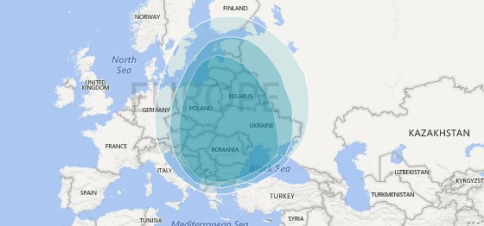
I knew my background regions all along. So, no surprises there. But what did shock me was how little of my DNA seems to come from Italy.

My profile states that I am 51 percent Western European, 24 percent Eastern European, 11 percent Great Britain and only 8 percent Italian. Whaaaat??? My grandpa was 100 percent Italian, as in, both his parents came from Italy and I’ve traced their roots very far back.

My grandmother was 100 percent Slovak. My other grandparents were 100 percent Polish and 98 percent Irish, with a little French Canadian thrown in because the Irish branch emigrated through Canada rather than the US.

I was expecting more Italian. But, ah, perhaps ol’ Fillipo Aristodemo had some other types of blood running through his veins!

I suppose it depended on what was in my spit that morning I took the test. Maybe the Italian portions were still sleeping.

I do take a lot of comfort in knowing that the majority of “me” is made up of the DNA most closely associated with my wonderful Grammy and my equally gentle, loving and kind Grandpa Krajenke (the Polish portion, if you couldn’t tell.)

I’ve been thinking a lot about how comforting this notion of inheritance is, at least for me and in my circumstance.

My mother-in-law, you see, is not doing well. She’s in the end stages of a progressive and ultimately fatal disease. My daughter, despite visiting her every week along with her Daddy, will only know her in pictures. However, there is a portion of her that will always be with her, that will always be with Jason, too.

My mother and father will be with me and with my daughter long after they are gone. A part of me will be with my daughter until the end of her days.

So, that means Grammy, and yes, Phil, are with me right now.

In physics, you learn that matter is neither created nor destroyed. With this test, it shows that is indeed the case. Lives echo on and on, catching the shore of the present day like the tide.

News from Pittsburgh

PasqualeDCCaptureThis was in the Pittsburgh Post-Gazette a few days ago.

I, of course, was intrigued by the appearance of Woodville, as that is the hospital where Pasquale died.

There’s a lot of political feeling around institutionalization, so we’re not debating that here. But what is sad is as these facilities are closed, there are many graves that are abandoned.

One never knows when the family history bug will bite, but one of the hardest things to hear as you research is “Oh! If you had come X years or months or days ago. We just threw it out/it got torn up/the place got demolished.” You kick yourself endlessly for not getting started sooner.

I reached out Sam Sirabella, the man mentioned in the article as possibly having information about Woodville. He did a record search for me and couldn’t find anything on Pasquale Brescia. As Father DeVille notes in the article, the site contains 1,064 graves. My great-uncle is very likely among them.

The article reminds me that I haven’t looked for Pasquale among the newly released PA death records. It doesn’t take me long to find him. There’s not much that I don’t already know here. I’ve got lots of other records confirming much of what’s there. But there are a few nuggets, the largest of which is that whomever wrote out this death certificate seemed much more inclined to accuracy. It now appears that Pasquale, Ottavio, Saverina and Cesare’s father was named Cesare Brescia. Their mother was Fillipina Oliva. Now there is consistency among the records for at least these two siblings. I feel comfortable updating my tree with the new information.

I also note there is a discrepancy of a day on Pasquale’s death date between the death certificate and the documents that left his money to the Venezia siblings and his brother Ottavio. I’m going to go with this record, since it the official state record.

I’m thinking the next time I head to Pittsburgh, I’ll see if my cousin Bryce, who was involved in a ghost-hunting group that explored Dixmont before it was torn down, wants to go for a visit. His group was featured on Scariest Places on Earth on ABC Family a few years back. Here’s his episode of if you want to check it out!

Gimme a D! Gimme an N! Gimme an A! What’s that spell? Mysteries solved!

DNAkit Boy oh boy. As if it wasn’t bad enough for me to spend all my free time immersed in records or writing, now Ancestry’s made it possible for me to get real answers via science.

I just got my DNA kit and I don’t know if I can wait the six to eight weeks it takes to get the results. What’s really cool is if you have a membership, you can enter your kit’s unique ID number and it will sync other people to your profile. So, no more guessing if these people are really your relatives. DNA says they are. My biggest hope is that some Venezia or Brescia relatives have taken the test.

It’s very simple. Spit into a tube (I did it first thing in the morning, before I even drank water). Seal it. Shake it up. Slip it in a little medical baggie and mail it off to Utah. It was in my mailbox by 8:04 a.m.

My husband did it and, well, let’s just say I may have to start a whole new blog devoted to the search for his family.

I’ll keep you posted on how I did.

Baby Girl Natale

NataleInfantCaptureThis is such a hard post to write. The title of the post is a warning; so, if these types of things are hard for you, read no farther.

For so many years, I’ve wondered what happened to the child my great-grandmother had just before she died. I’d hoped that somehow the child survived and there was a branch of our family just waiting to be discovered.

Now I know that was never to be the case. A few days ago, Pennsylvania released an enormous collection of death records, from 1906-1963. What I wrote away for all those years ago is now available right on my Ancestry page.

The baby, never named, was stillborn on Dec. 28, 1916. It was a girl. For some reason, I had always pictured the child as a boy. In fact, in my book, the child is a boy because I felt so strongly that she would have another son. Further proof, I guess, that your strongest assumptions can be total errors.

My heart cracks in half. I am writing this with my daughter’s monitor perched by my side, watching her sleeping peacefully. Mommy is hugging her extra hard tonight. I don’t care if I wake her up.

There is such a potent rush of emotions that occur when you give birth. I know the joy of seeing that little face held up for the first time, hearing her cry and know that the two of you — mother and child — have just come through the danger (no matter how modern the medicine or healthy you are) together.

The form does not indicate on the form the reason for the stillbirth, so we don’t know if the baby was premature, had some type of birth injury or was born in circumstances that prenatal care, fetal heart monitoring, C-sections and other basic medical interventions mostly prevent these days.

I also know why there was no body with Saverina at Mount Carmel. The child was buried in Calvary Cemetery. I will be calling them in the next few days to see what information they might have. It’s possible this is a potter’s field burial, with no stone and very little information.

This information again shifts my extremely conflicted feelings about Mike and Saverina. For all I feel they did wrong (not keeping the siblings together), it’s possible that the lens of grief led to decisions that perhaps were not fully thought through. I can’t blame them for that. I also can’t forget that while these types of things were more common in this era — spousal death at a young age and death in childhood or childbirth — they were no less tragic. Grief is different for everyone and no one way is right.

My great-grandmother suffered so much in the two short years between Francesco’s death and her own. The death certificate for the baby notes her maiden name as Saverina Venezia, and I wonder if she never did get over losing him. Because her death occurred in such a short period of time, she also never got the redemption that sometimes comes with years and understanding. I am hoping, at least, that the faith she had was her final comfort.

Ziu Antonio

CarminaCapture
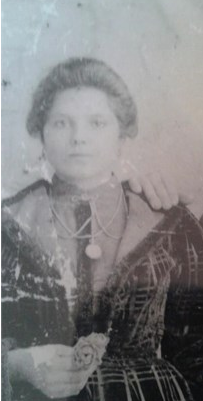
Grazia Carmina Giulia Venezia Pullano, Antonio’s daughter and first cousin to Phil, Joe and Mary. This is her wedding picture.

One of the most fun parts of writing the book has been connecting to relatives that I didn’t know I had. The Brescia brothers are an interesting lot to be sure, but I’m thrilled to have found the Venezia siblings, too.

My great-grandfather was one of three apparent children. Antonio was the oldest. Then came Teresa Sebastina. And, in what seems to be somewhat of a “surprise!” pregnancy, Francesco came along.

I owe this great bit of information to the incomparable Dina, who routinely goes to Sorbo’s main record halls to photograph records and managed to find the Venezias.

I also learned that it was very common for the folks from Sorbo San Basile to use their middle names, rather than their given first name. This most likely had to do with the Italian naming convention of male children being named for their grandfathers and female children for their grandmothers. It would get confusing after a while, I’m sure. All you have to do is remember the scene from ‘Goodfellas’ where Ray Liotta’s character is at his wedding and introducing his wife to all the cousins. So Antonio was, in reality, Giuseppe Antonio. And Francesco’s real name is Michele Francesco.

I can’t help but see that Saverina happened to marry a man who had the same first name as her deceased husband. Maybe that was her first mistake — to think the same name would equal the same type of person. Not all Michaels — or Laras or Philips or Jasons for that matter — are created equal.

And I also have come to find out why Antonio disappeared from the U.S. record. Antonio followed his little brother to America. He left behind a wife and five kids (yes — real Venezia relatives!!) to come to America. While here, he lived two doors down from Francesco and Saverina.

Antonio himself, sadly, would not live much longer than his brother. He died in 1918 back in Sorbo and is buried there. Of the five children, I have records for just two — the oldest and the youngest daughters. Each of them went on to have enormous families. Nearly 20 children between them.

I see so much of my grandfather’s story echoed in his father and uncle’s. Phil and Joe never lived more than a few miles apart, with the majority of their lives lived on the same street. As much as they could, Francesco and Antonio did, too. Because he was so much older, I imagine Antonio as perpetually amused by his little brother, but liberally dropping the “big brother” card if he had to. Perhaps this is far, far from the truth. But as I said before, I’ve taken a lot of liberties and fiction lets me. So why not consider Antonio from that angle, and hope that at least for a little while, Phil had more than one adult male he could look to for support?

The 1940 Census is here!!

Census1940In business-ese, digging into something and spending a lot of time with it has a jargon-y phrase: taking a deep dive.

Well, I’ve been scuba-diving in the 1940 Census since it was released a few days ago.

It’s not exactly relevant to my writing project. It’s more like a roadmap for what happens next. If writing is about building a story arc, then these bits of information might help me craft scenes that allude to something that may not happen for a decade, but still matter. And besides, if I see where they go, it will help me stitch together the path of how they got there.

Of course I had to look up Grandpa first. What I found is interesting. He’d moved out on his own. He was listed as a lodger at a boarding house on Lockhart Street. It doesn’t exist anymore. The street dead-ends under bridge on the North Shore. It’s interesting that Grandpa’s noted as having zero education. I’d always heard he’d never gotten beyond 8th grade. But it looks like the census man spoke with him directly. Hmm. I was happy to see he worked all year in 1939 as a “produce man” (I suppose that could be an abbreviation for manager or it could just be produce man). But that he’d made only $1000 for all his effort. It sounds abominable, but in reality, it was on the lower end of middle class. I figure he had a lifestyle very similar to the one I had when I was single and working for my first newspaper. You were OK, but you really hoped no big bills or unexpected circumstances hit.

I wonder how he felt, living alone. I know that when I shut the door on the first day of living in my first apartment, I was so excited to be in charge of everything. Seems crazy now, of course. Haha. But I wonder how a guy, who’d spent his entire life making sure his family stayed together, felt to finally have a little bit of space for himself. His little brother was married. His sister was being taken care of at the Fresh Air Home. Maybe he just relaxed a little. I hope he had some fun. I hope he went out at night, had girlfriends and found something interesting to do in his spare time. Maybe that’s when he learned to play the concertina!

As we know, Joe and Ruth got married in 1932, so they were out of the Brenckles house, too. They lived in the rear of Ruth’s mother’s house. They had been living there at least five years, too. Joe is a laborer in Retail Food. I’m not sure if that means he’s slinging produce boxes at Donahoe’s with Phil, if he’s working for the Brenckles’ stand or something else.

I also looked up Marion, to see if she was still hanging on. She was. She was still in her house on Ruby Way, but with one more kid. And her brothers were still living with her, although it seems that this person who’s doing the correcting to their posts has made the boys Stephen’s brothers. Their names are also misspelled, but misspelled in the same way they were a few times in the fire coverage. Grost. In fact, the cursive D looks like a G, so the Ancestry algorithm could just be picking up the variation.

Either way, by the eve of World War II, it looks as if everyone had put the events of the past behind them. They were, after all, a solid 17 years behind. For grandpa, it was actually pretty significant. He was 16 when it happened. He was now moving into a future where he was a full lifetime removed from all the troubles of his childhood.

When I think about Phil’s life, sometimes I think of Andy Dufresne from the ‘Shawshank Redemption’ and the line in the movie, as Andy’s escaping: *Morgan Freeman voice* “Andy Dufresne, who crawled through a river of shit and came out clean on the other side…’

That’s about right.

Look who’s back, back again

Yeah, I kinda flaked for a year there on my postings.

To be honest, my research shut down as I conducted two more vital ones. The search for a new job (my choice, don’t worry!) and a new house (because it was time).

I’m happy to report that both were successful. I’ve got a new gig in Corporate America where I will continue to write, but in a different format and style. And Jason and I, after three years, finally found a place to call our own. Thanksgiving 2010 was spent binge-researching at the Carnegie Library. Thanksgiving 2011 found me elbow deep in paint and spackle.

But now that things have finally calmed down at work and on the homefront, I’ve gone back to my evenings in front of the TV, where I “Play along at home” as I watch ‘Who Do You Think You Are?’ The first episode of the season was Friday (Martin Sheen) and I dug into the website after the show.

Saturday’s mission was seeing if I could find out what happened to the Drost kids. Marion, Frank, Thomas and Joseph survived the fire just as Phil and Joe did. Surely, they had scars from that ordeal, and likely more deeply because they lost their sister. Phil, miraculously, kept his sibling.

So, I started poking around. I found the family easily enough in the 1910 Census. Their father was also Frank. And he was an iceman in this family snapshot. Interestingly enough, there is the children’s mother, Teresa. The family appears to be of Polish-German origin, which means over the next two censuses, their national identity will change at least twice as the boarders shift due to war.

But a decade later, Teresa is gone. Frank, as the papers had said, was a police officer for the city. Interesting. I look up at the date on the census. It was recording literally the month before his children became wards of the Allegheny County Juvenile Court. A policeman. With four kids in county care. That alone would be front-page news today.

It’s hard to find big Frank, but by 1930, I think I may have found Marion and little Frank, along with Thomas.

If it is the same family, Marion is now Mrs. Marion Baker, with a young son named Paul who is almost 3 (quick math, NO he is not Howard Lager’s). Frank Drost and Thomas Drost (correct ages) are living with them and recorded as being brothers of the head of household, a title Marion and her husband Stephen seem to share. He’s recorded as Head, but there’s an H next to her name.

Again, though, I can’t be 100 percent sure because someone has used the feature Ancestry gives you to allow corrections to historic documents. I could have made one, for instance, when I saw how badly Pasquale’s name was misspelled in the 1920 Census.The corrected name is something else entirely, which holds me back from believing this is the outcome for Marion and her siblings.

I hope it is. Because that would mean that she at least (I hope) found peace and a home of her own. Her husband is a steelworker, and if Stephen’s personal history held to the wider arc, that would mean the family probably found a solid, middle-class life. And, just like Phil, she managed to keep her immediate family together.

Questions answered

PhilandJoeonthefarmI just got back from the Brenckle Family Reunion. And oh boy, did I once again hit the motherlode.
So, to answer your question, yes, there’s a significant faction within the family that believes Howard Lager did get away with murder. And there were other concerns, as you can imagine, as well. Particularly with the female members of the family. No one had a definitive answer, though.  A few people thought they heard that Howard had gotten Marion pregnant and that was what the fight on the night of the fire was about.

There was also a rift, apparently, among the Brenckle siblings over the use of these farmed out children. A certain part of the family thought it was unethical and it got pretty heated.

But no one could say anything for certain, and because of that, I’m still wary of pinning criminal labels on anyone — even though you can’t defame the dead.

I shared all the stories I had, and also the research I’d done on the Brenckle family itself. I had copies of Raymond and Myrtle’s marriage license, census records for branches of the Brenckle family and a few odds and ends.

After dinner, we went down to the basement because they had a surprise for me.

“I thought you should have them,” they said as they handed over two envelopes of pictures.

If I was shocked by seeing my grandpa on the front page of the newspaper, these two envelopes shocked me even more.

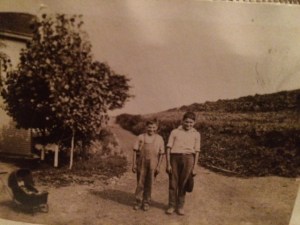
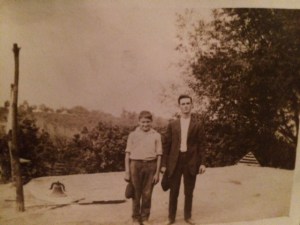
The picture at the top of the page is Phil (right) and Joe (left) the summer after they came to the farm. This is the youngest I have ever seen either boy. Unless I stumble on a trove of baby pictures by a forgotten Venezia relative, it maybe as young as I get.

I look at their faces and I can see that they are happy. It makes my heart soar. They look like they are having a terrific time. After all they’ve been through, they’re in the summer sunshine, together, with clothes and shoes. Grandpa looks a little silly. I’ve seen my brother make that same face when he’s being goofy and someone’s trying to take his picture.

PhilonthefarmThis next one is just Phil with another one of the farmhands. It might even be Howard Lager. I think it kind of looks like him.

These pictures make me think again — if you’ve got dozens of kids passing through your farm just to do work, why take their picture? Why treat them like members of the family if you were just going to cast them out when the season was over? That wasn’t going to be my grandfather’s and great-uncle’s fate, it seems.

Joe's weddingThis next one cracks me up. Joe, even though he was the baby brother, was the first Venezia boy to get married. In 1932, he married Ruth Broglie. Joe, looking almost like a movie star, is on the left. Phil, on the right, was his best man. Awwwww.

I laugh because my dad looks like that in a tux. He stands the same way, with his hand at his side, fingers curled almost the same way. They look so Godfather. I’m not sure who the little girl or the maid-of-honor are. I’m also shocked to see how much both boys look like their parents. Joe is Francesco with Saverina’s eyes and forehead smoothed over the sharp edges. Phil is his mother, with his father’s thin face pulling what could be too round into a squarish-oval. Two more generations, and my face is what my Grammy always admiringly called “the perfect oval.” I never thought so, but I guess that meant something back in the day. 🙂

I’m full of good food and good memories now. I may not have concrete answers, but I have ideas. And as I think about writing the book, those ideas will surely guide my imagination.

Blog at WordPress.com.

Up ↑