Search

findingphilblog

In search of my grandfather's past … and maybe a book deal

Category

The Search

Memorialized

The thing that’s always drawn me to newspapers is the sense of immortality. A hundred years from now, whether accidentally or on purpose, someone looking for information will find it, and find my name. Maybe they will like what they read. Maybe they will think it’s trite and old-fashioned. Either way, it’s part of history and, if there’s another girl, far into the future, searching for her roots, maybe something I wrote can help.

Which is why it means the world to me that my paper published the article based on my research. You can find the link here. I love what they did with the cover, using Grandpa’s picture. I grabbed a bunch of copies to send to Mom and Dad, give to Mary Ann, Arnetta — lots of folks.

Like the article says, I’ve learned so much in all these months researching. I feel I know so much more about Grandpa himself. I’ve learned about judgement and luck. About the things that should break you and don’t. About the power of humor, and family, and how this city, my city, can shelter and shun. I guess you could say I’ve learned a little more about what it means to be human.

And I’m not done. All of this has convinced me I need to write a book. And it has to be about Grandpa’s life. There’s one story in all of us. That’s what Harper Lee always said, right? This one’s mine.

So, I’ll search on and see where this tale takes me.

Cry Uncle

Over the weekend, I decided to take my new Ancestry membership out for a spin.

I’d gone back over the guardianship documents, including the two other pages I’d not really examined carefully until now and I realized I’d circled in on a new fact. I could place Phil with his family in 1910. Both of his parents were dead by 1917. By 1922, according to the trust documents, Phil and Joe been placed with the Brenckles and Mary was living at the Fresh Air Home. So, there were four missing years. Where did the three kids go?

Again, a fragment of a fragment set my direction. There were two things I remembered Grammy telling me about how Grandpa had come to live with the Brenckles.

“They lived with an uncle who was terrible to them. He was a drunk. He wanted them just for the money,” she’d said. I had always presumed that meant the money people get for taking in foster kids. But maybe it meant their father’s money.

When I’d asked if they’d ever lived in an orphanage, she said she remembered Toner Institute. I always thought it sounded ominous.

I started with the uncle. The next Census would have been in 1920, so I pulled up Ancestry and started searching there.I now had at least four different uncles to pick from. Who would it be?

“Patsy Ritonda?”

Patsy. Patsy. Duh. Patsy is short for Pasquale. How the Census-taker got Ritonda from Brescia I’ll never know. But I did note the taker’s name was German. I pictured two men with thick accents trying to understand each other — neither one caring much how questions were answered.

I found the siblings simply enough, though their names were again misspelled. If it’s one thing all this research has taught me, it’s that misspellings are just as important as correct ones — if the other material adds up. There’s a margin of error every time you look for someone. A birthday that’s a day or two off. A name spelled close, but not exact. I’ve learned that our vital information really wasn’t standardized until after World War II, when a lot of returning GIs leaned on their war records as official documents.

So, anyway, there they were, living on 41 Fleming Park Avenue in a place called Pittock, Stowe Township. When I found it on the map of Allegheny County, tucked between McKees Rocks and Kennedy Township, I realized that I had been there at least two dozen times. Grammy liked to go to the tiny Catholic Church in Pittock — instead of her usual St. Malachy’s — every once in a while.

I called my dad.

“Did your dad ever say anything about living in Pittock?”

“Yeah.” I could hear his voice catching the thread of memory. “He did. I remember one or two times, when we were driving into the Rocks, we’d go past the bridge and he’d say he used to live over there. I didn’t put it together until now. Why? You said he lived in East Liberty.”

“Because I think I found ‘the uncle.’ You know, the one who mistreated them? His name is here in the census as Patsy Ritonda.”

“Patsy Ritonda? Never heard of him.”

“It’s Pasquale, Dad. Your grandmother’s brother. The guy who left them the 1500 bucks. I think he’s the guy. They were living with him.”

We were both quiet. The thing is, more than “simple” hardship came out of the siblings’ time with their uncle. Grammy had told us it was during that time that Grandpa had contracted the strep throat that ended up weakening his heart. The heart that would eventually kill him long before his time, and just a year or so removed from the invention of life-saving valve replacement surgery that would have given him so many more years.

Joe, who was known his whole adult life by the extremely un-PC nickname of Crip (as in cripple, because he walked with a limp. oh boy), had fallen off a horse and broken his ankle. It had gone untreated. And Mary had contracted the tuberculosis that twisted her bones and stunted her growth.Three years in a body cast.

“That guy sucks,” I finally said.

As we hung up, something at the top of the third paper caught my eye. I shuffled back and forth between the computer screen and the paper.

The guardianship papers had Pasquale’s date of death as November 29, 1920 at Woodville State Hospital. A quick cross-reference (thanks again, Google!) revealed that Woodville was a home for the insane (gulp). But they also took a fair amount of tuberculosis patients. That was more likely, and it explained Mary’s exposure. If she had somehow managed to fight it off when her father was sick, being exposed by Pasquale was surely too much.

The census had been taken in January of that year. By the time that census taker reached their door, the siblings were living on borrowed time.  I searched for Pasquale again, using a variety of misspellings, and pulled up a World War I draft card, filled out June 5, 1917 — five months after Saverina died.

It was requesting an exemption to the draft because he was “sole support of three nieces (sic).”

The address was the same. The job was the same. And so was the place of birth.

I had my man.

But beyond that, I had a real timeline now, and an apparent chain of custody. From both parents to their mother to Pasquale to the county.

But my mind flipped back to good old Mike Natale. He was their stepfather, for pete’s sake. Why didn’t he keep them and their half-sibling together?
Resurgam

One of my favorite books is Charlotte Bronte’s “Jane Eyre.” When her friend Helen dies, she’s buried at Lowood School under a stone that says “Resurgam.” Latin for “I will rise again.”

That word kept running through my head as Jason and I made our way to Mount Carmel Cemetery.

Because, after 90 years, Francesco and Saverina’s memories were rising again. We had to stop at the cemetery office to get directions to the site, which was fairly easy to find. It’s a nice spot, as these kinds of things go. Just below a dip in a hill, near the cemetery’s baby section. I try not to think of all those tiny tombstones with little lambs on them as I walk up to my great-grandparents’ grave.

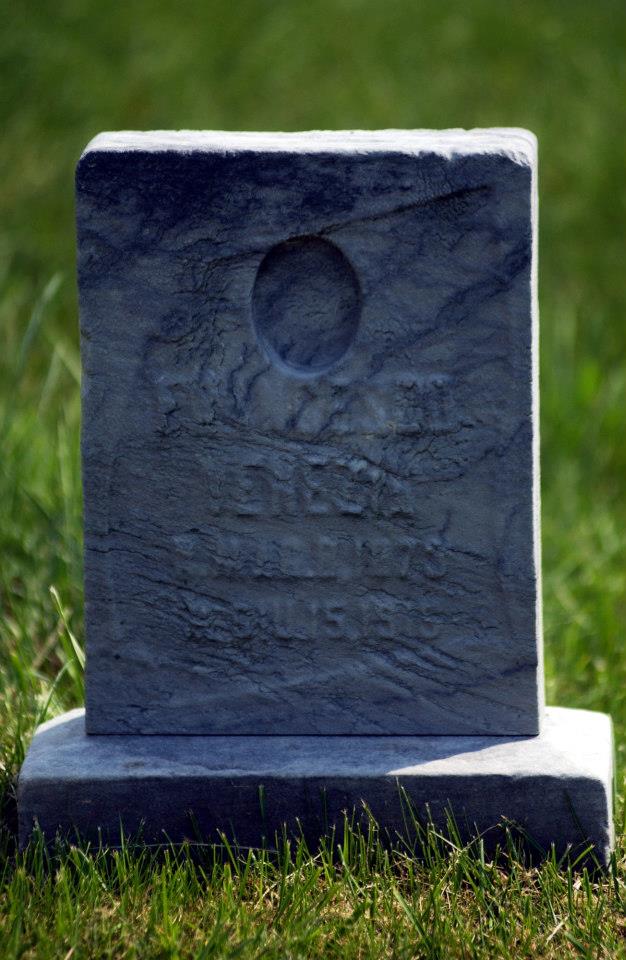
Francescosgrave There they are. I’m shocked to see that there’s only one stone. My feeling for my great-grandmother again fluctuates. Why did her new husband not see fit to buy her a stone. It makes me sad. Because I see that despite the missing picture (it would fit on that little notch), Francesco’s name, date of birth and date of death have withstood the test of time. The grass is neatly tended around the monument to his existence. Were it not for the little record card in the cemetery office, I might never know Saverina was right there next to him.

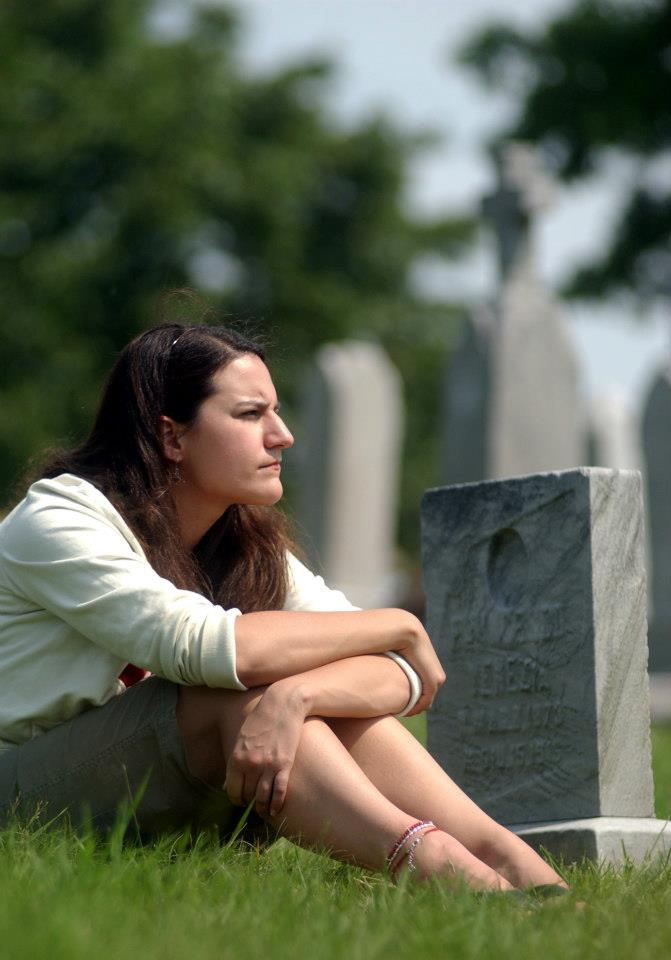
I sit down on the grass and try to feel whatever connection might still exist between myself and the bodies below. The weight of history somehow feels incredibly present. I think of my Grandpa. Did he ever come out here? If he kept his concertina-playing skills a secret, maybe he had a few clandestine visits to his parents. Or, maybe like a lot of men in his day, he just didn’t look back.

LaraBrenckle1 It’s a sunny day, and not too far removed, I realize, from the 91st anniversary of his death. I think about how there was no way Francesco could have imagined his little boy would have a little boy of his own, and a daughter as well. That they would go on to each have a boy and girl of their own. Two writers, a banker and a pharmacist, all living in Pittsburgh together.

Whatever Francesco and Saverina’s American dream had become, my dad and aunt, me, my brother Philip and my cousins Kristin and Bryce were proof that at least some of it had come true.

FirstVisit

Photo credit for these awesome pictures to my fabulous boyfriend, Jason Malmont.

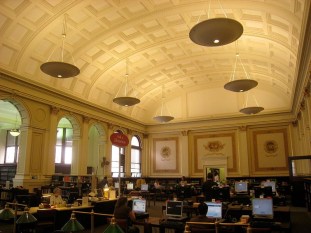
The Carnegie Library is Awesome

That’s the title of my post because, well, it is.

800px-Carnegie_Library_of_Pittsburgh_-_IMG_1162I just got back from an all-day research binge in the library’s Pennsylvania Room.
I have a stack of census forms, a sheaf of photos and a whole lot of answers.

The biggest asset they have is access to ancestry.com, which I’ve been dying to join for ages.

The first thing I did was dig through their Census records. Thank goodness I’d found that will because I knew to search and verify information by everyone’s Italian name, rather than the Americanized version. Jackpot in the 1910 Census!

I now know that when my grandpa was 3, he lived with his mother, father, sister, brother and uncle Pasquale (who was listed as a boarder. Interesting.) on St. Andrews Street in East Liberty. I looked it up on Google Maps, but it doesn’t look like it exists anymore. But using Our Lady Help of Christians as a beacon, I was able to trace the boarders of his early life. The church is within walking distance of their house. Enterprise Street, where Saverina eventually moved, is only a few blocks over in the opposite direction.

This record has Francesco doing odd jobs, so I wonder if he’d been laid off. Maybe he was a Francesco was working for himself, kind of a freelance tailor?

I’d pictured them living in a walk-up apartment. Not real big. Maybe even something like this.  But the address seems to indicate a house-house, rather than an apartment building where they might share a few rooms. All of their neighbors have different house numbers. Was it possible they lived in their own home, albeit a rented one? Francesco and Saverina had been married for 6 years. She’d had three children and three live births.

It made me smile to see the five of them and their uncle together. It’s the first real mental image I’d been able to conjure of my grandfather belonging to his birth family. And in this record, they really were.

Here’s a quick run-down of my other discoveries:

  • Cesare and Pasquale Brescia, Saverina’s brothers, were part of a group of people known as “birds of passage.” They sailed back and forth between Italy without becoming citizens. I found records indicating that Cesare, the brother who’d come with his newlywed sister to America, would return to Italy in 1907 and 1913. He’d tried to come in 1912, but had come down with the dreaded eye disease trachoma and had been turned back. Pasquale, who’d also come in 1904, left in 1913 and returned in 1914. How and when Ottavio, the uncle from the Guardianship  papers, came to the US remains a mystery
  •  Loads and loads of pictures from the ‘Italians’ picture collection. I now have a pretty good visual idea of what it was like to walk through the streets of East Liberty, how kids and adults dressed, what types of buildings and landmarks made up Phil’s life.
  • Information about the Sewickley Fresh Air Home, where my great-aunt Mary lived much of her life. I’ll write a separate post about her later.
  • Sanborn Fire Maps. Oh my god, I’m in love with them. Big digital maps that are overlaid. You can find all the old streets, see old buildings that were torn down, who owned them. And the best part about them is you can access them outside the library.

A hometown — Finally!

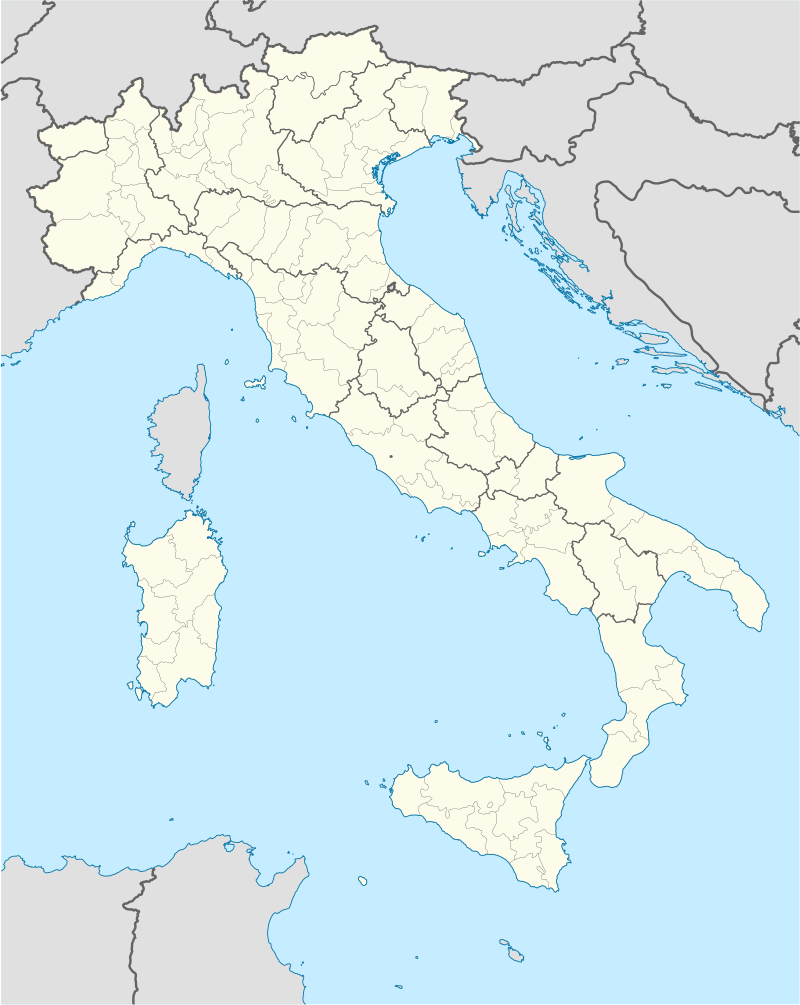
800px-Italy_provincial_location_map.svgWhen I was about 10, I went to the Statue of Liberty. I was desperate to visit “the place where my ancestors came,” but Ellis Island was years from being renovated. So, a picture of me at the base of the Great Lady in a silly foam crown had to do.

I had no idea if it was true that my ancestors came through Ellis Island or not, but now I know that it was.

Turns out Ellis Island’s search is free. And, well, I just may have burned the two hours waiting for my county commissioners meeting digging around.

I’m pretty sure I found him. August 4, 1904. That’s when Francesco landed in America with his wife and her brother, Cesare. But I can’t figure out why Saverina’s name is recorded as Teresa Pasqualina. She’s 19. He’s 30. Wowza. I guess the guys in our family always did dig younger chicks. My mom’s seven years younger than my dad. I’m 8 years younger than my boyfriend. Grammy was eight years younger than Grandpa Phil.

Francesco? Dates totally check out. Cesare Brescia? Yup. If I go by the age of the Trust Administration document and do some math, this Cesare is the right age, right name. If these are definitely my people, it means that my father’s family is from a place called Catanzaro. I looked it up. It’s basically in the arch of the boot of Italy, a costal town with a rugged inland. It looks amazing. I already want to visit.

It just feels right. The manifest said Francesco was a tailor, which is what I remember Grammy telling me. He was headed to Pittsburgh. But to is own house. Hmm. And it seems to indicate that he was in the US from 1889 to 1904. U.S. Citizen Discharge on the Pier is stamped over both his and her names. So, were they both citizens already? If they’re coming back from Italy, did he marry her here or there? Meet her here or there?

There’s also the name of the ship. The Konigin Luise. A picture I can buy. I stare at it for a long time. I wonder. Was their passage like the people in steerage that I saw in “Titanic”? Was it worse? Better?

I call my parents and my dad gets on the phone.

“Catenzaro,” I said. “That’s where we’re from.”

My dad can’t believe it. He traveled through Italy with a friend after he got out of Vietnam. He said he must have come within miles of the place.

I ask him again about Francesco’s will. He said he never heard his father talk about getting money from his father. Of all the questions that are lingering out there, this is the one that bothers me the most. I’m a journalist. What’s the first rule of journalism? Follow the money.

My first discovery

Guardianship1 My mind is reeling. When the man in the Register of Wills Office returned, this is what he brought. It’s a guardianship document. And it cracked open my world.

There my great-grandparents names. Francesco Venezia and Severina Brescia. Frank and Sarah were obvious Americanizations. Severina had at least three brothers. Ottavio, Cesare and Pasquale. I had contemplated her life a thousand times, but for some crazy reason, I never thought of her as part of a real family. My family. But here they were. A family of four (more?). Pasquale was dead and he’d left Ottavio, my grandfather (Phil), great-uncle (Joe) and great-uncle (Mary) $1,500 to split.

I did a quick calculation in an online calculator. That’s about $4,000 in today’s money. Not a bad chunk of change for a bunch of kids. Which explains why they were being set up with trusts.

My pal in the records office is as excited as I am. He tells me to fill out another form and he’ll see if it was paid out.

“Actually,” he says. “Check the Vs. Maybe your great-grandfather had a will, too.”

Adrenaline pumping, I flip pages. Bingo.

“He had a will?” I can feel my mouth hanging open. “My immigrant great-grandfather had a will?”

“Seems so,” he says. “Fill out another card. I’ll be back in a few minutes.”

Few minutes. Ha! It takes an eternity before he brings a few photocopies of Pasquale’s bequest to his family and a small, rectangular envelope. Francesco’s name is written in that perfect cursive I’d always wished I could write.

“I, Francesco Venezia, of the city of Pittsburgh and the State of Pennsylvania …” My eyes skitter over the words. “To my beloved wife .. THREE bank accounts… To my beloved daughter and beloved sons, I leave the remainder in trust…”

My eyes cloud over.  He left them money. He died and he thought ahead enough to save for the day he knew he couldn’t be there. He left his wife money and enough for his children later.

“How much is 13,000 lira,” I ask to no one in particular.

My records sherpa smiles and shakes his head.

And dangitall. My phone rings. Time to go to work.

I stay long enough to get photo copies and I call my parents, breathless, on the walk back over to the courthouse.

When I get back to the newsroom I can’t resist running a quick calculation. In 1915, the year the will was drafted, 13,000 lira was about $2,000. Enough to buy a small home. I carry those pages with me all day long and a single thought has formed in my head.

“He was loved. No matter what happened after, Grandpa, Joe, Mary. They were loved.”

Diving in

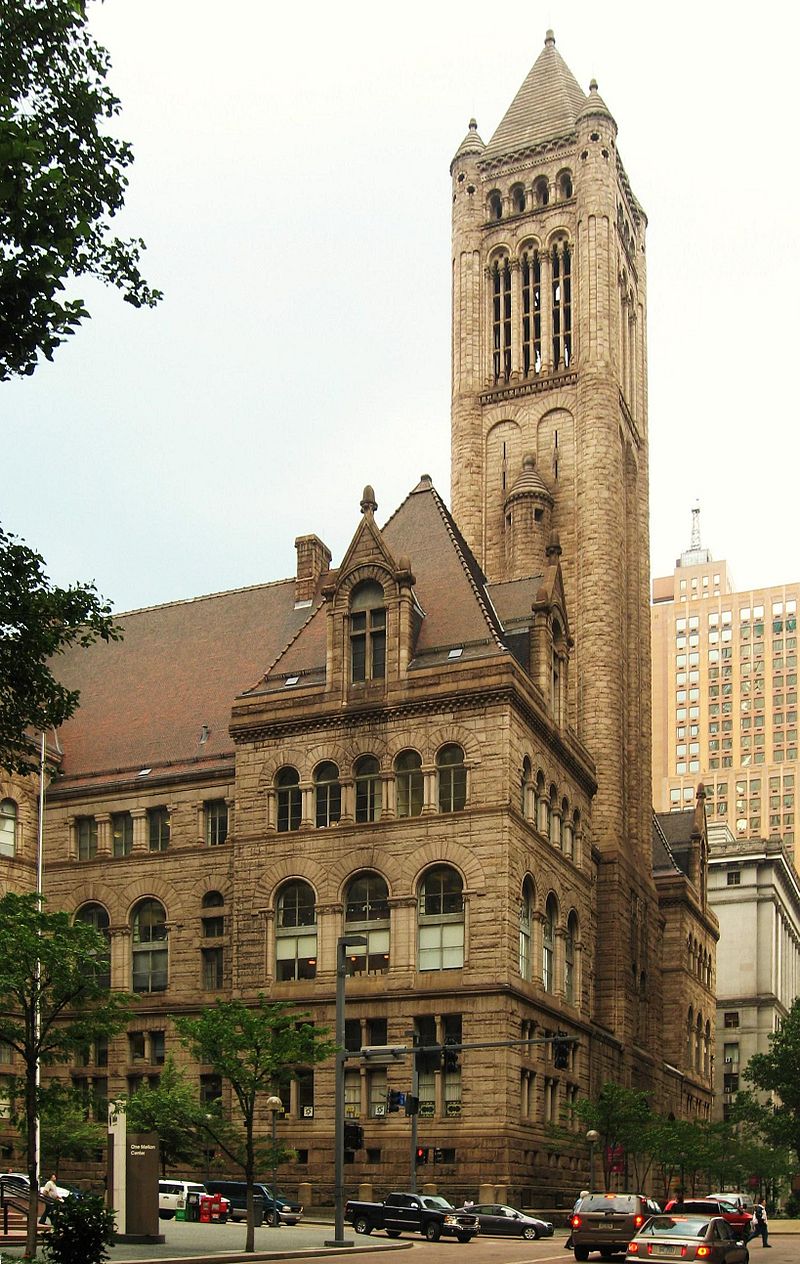
800px-AlleghenyCountyCourthouseI have to admit I was miserable this morning.

I walked into the empty newsroom, sat down on a broken chair at my old wooden desk, looked down at my wrist-rest-less computer and just put my head down. I didn’t think I could actually get through another day here. Pittsburgh is my hometown, I thought. I cried my eyes out wanting to come back when we moved away in 2nd grade. So why on earth when I did — albeit 20 years later — feel so bad? Well, it’s complicated. But then, a crazy thing happened.

Out of nowhere an image vaulted forward in my brain. Clear as if he was standing in front of me, I saw him. His picture, really, since that’s all I’ve ever had. He died 14 years before I was born. But I could see him smiling the same smile I’d looked at every morning. The picture in the gilt frame I’d had on my dresser since I’d found it up in Grammy’s attic. Grandpa Phil.

For my entire childhood, I missed him. Grammy always told me of the four grandkids (my brother, and my dad’s sister’s two kids), I was most like him. “He would have loved you,” she always said. And I know I would have loved him, too. I had a thousand questions, and she only had about 100 answers. There were so many missing links. Where in Italy did we come from? How did his parents die? Was it really in the influenza epidemic? Where did he go after his parents died, but before the Brenckles adopted him?

The second thought hit me just as hard. Of course. I was sitting in the Allegheny County Courthouse. Literally on top of thousands and thousands of public documents that could have anything to do with his adoption, his parents dying.  I’m a county government reporter, dang it. I can do this. I can finally discover the truth about my Grandpa Phil’s life.

And I had to start right now.

The government offices were open. I had time.

So I ran across the street to the City-County Building and the Register of Wills’ office. A very nice man guided me to a stack of record books.  In under five minutes, I’d found him.

“Yup,” the man said, pointing to a name in the stack. “Right here. Venezia. Philip. Joseph. Mary. Looks like someone left them some money. Fill out that slip there and I’ll bring up the document for you.”

Blog at WordPress.com.

Up ↑