Search

findingphilblog

In search of my grandfather's past … and maybe a book deal

Tag

Ottavio Brescia

Watching the Italians

iaLandscape

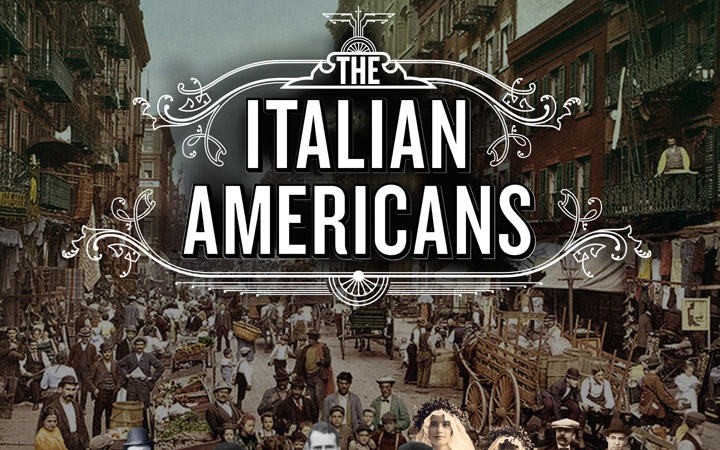
I can’t speak highly enough of this incredible series. PBS always does a fabulous job with documentaries, but ‘The Italian Americans’ is superb. I’m only two hours in, but I am already wishing for the next installment.

I loved hearing about the “birds of passage,” stories which filled in more deeply my notions of the trips Pasquale, Cesare and possibly Ottavio took from the U.S. to Italy.

It also clearly articulates the harsh conditions Francesco Venezia likely left in Italy and the different set of challenges he faced once he arrived. In all the reading I’d done in preparation to write my book, I’d come across all kinds of things that made my jaw drop.

Full-page ads from the Sons of Italy saying “We’re Americans, we love this country!” during the height of both World Wars. Descriptions in newspaper articles that we would today call blatantly racist. That, taken with the information presented in the series, made me realize that what I am so proud of today would have made me an outcast a century ago.

There is so much that my grandfather likely protected my father from. From Phil’s memories of a broken childhood and the possible violence that may have been a part of it. From the taunts and slurs Phil probably endured, possibly into adulthood. Not everyone manages to do that, to keep the bad stuff back and in the past. It makes me respect him, and my ancestors, even more.

My first discovery

Guardianship1 My mind is reeling. When the man in the Register of Wills Office returned, this is what he brought. It’s a guardianship document. And it cracked open my world.

There my great-grandparents names. Francesco Venezia and Severina Brescia. Frank and Sarah were obvious Americanizations. Severina had at least three brothers. Ottavio, Cesare and Pasquale. I had contemplated her life a thousand times, but for some crazy reason, I never thought of her as part of a real family. My family. But here they were. A family of four (more?). Pasquale was dead and he’d left Ottavio, my grandfather (Phil), great-uncle (Joe) and great-uncle (Mary) $1,500 to split.

I did a quick calculation in an online calculator. That’s about $4,000 in today’s money. Not a bad chunk of change for a bunch of kids. Which explains why they were being set up with trusts.

My pal in the records office is as excited as I am. He tells me to fill out another form and he’ll see if it was paid out.

“Actually,” he says. “Check the Vs. Maybe your great-grandfather had a will, too.”

Adrenaline pumping, I flip pages. Bingo.

“He had a will?” I can feel my mouth hanging open. “My immigrant great-grandfather had a will?”

“Seems so,” he says. “Fill out another card. I’ll be back in a few minutes.”

Few minutes. Ha! It takes an eternity before he brings a few photocopies of Pasquale’s bequest to his family and a small, rectangular envelope. Francesco’s name is written in that perfect cursive I’d always wished I could write.

“I, Francesco Venezia, of the city of Pittsburgh and the State of Pennsylvania …” My eyes skitter over the words. “To my beloved wife .. THREE bank accounts… To my beloved daughter and beloved sons, I leave the remainder in trust…”

My eyes cloud over.  He left them money. He died and he thought ahead enough to save for the day he knew he couldn’t be there. He left his wife money and enough for his children later.

“How much is 13,000 lira,” I ask to no one in particular.

My records sherpa smiles and shakes his head.

And dangitall. My phone rings. Time to go to work.

I stay long enough to get photo copies and I call my parents, breathless, on the walk back over to the courthouse.

When I get back to the newsroom I can’t resist running a quick calculation. In 1915, the year the will was drafted, 13,000 lira was about $2,000. Enough to buy a small home. I carry those pages with me all day long and a single thought has formed in my head.

“He was loved. No matter what happened after, Grandpa, Joe, Mary. They were loved.”

Blog at WordPress.com.

Up ↑