Search

findingphilblog

In search of my grandfather's past … and maybe a book deal

Tag

Philip Brenckle

Found, Together

It still doesn’t feel real. Twenty years after I put my head down on a lonely desk in an empty newspaper office and pulled it up with his image burning across my brain, this journey Grandpa Phil and I took together meets its incredible conclusion. I have a book deal.

On May 13, I signed with Sunbury Press to publish Three Rivers Home.

While there’s still so much to do (developmental editing, more beta reads, fact-checking), I’m reveling in the joy this moment brings.

It will be real, on a shelf, just like the thousands of books that shaped my childhood and adulthood. What’s more, in seeing a little boy who lost everything thrice over survive, readers might find strength to get through their hardest days.

Last week, I got to share I the happy news with my amazingly supportive friends at Pennwriters during our annual conference. It was at the 2024 event in Lancaster that I met Lawrence Knorr, Sunbury’s CEO, and pitched my manuscript. Returning to Pittsburgh, where I’d begun pitching, was an especially sweet, full-circle moment. The talented colleagues I’ve met through Pennwriters are an invaluable source of inspiration, information and generosity. One theme running through Three Rivers Home is finding where you belong. Like stepping through the doors of Ursuline Academy, onto the portico at the E.W. Scripps School of Journalism or into newsrooms across Pennsylvania, there’s something soul-settling about gathering with my fellow writers.

So, what have I learned across two decades, thousands of hours, multiple rejections and more than one computer disaster that almost ate all my hard work? The same thing Grandpa Phil did: Just.Keep.Going.

Satisfying endings aren’t guaranteed. It’s only in looking back that all the connections seem to point toward success. In reality, nothing’s certain — except that giving up ensures failure.

The family Grandpa and Grammy created remains. Not all in Pittsburgh, but we are together, living in a future I’m not sure either could imagine. The family his story created — through writing groups, compassionate beta readers, encouraging friends and helpful historians — will add new members as the book launches (date to be determined.)

Music has been another constant through this journey. From Phil’s mysterious, one-time performance of “Sweethearts on Parade” to the “Hamilton” and “Moana” soundtracks that soothed the pandemic’s depths and inspired me to keep trying. It wasn’t a surprise when a song I’d long forgotten found me again. “Almost Home,” off Mary Chapin Carpenter’s “Party Doll and Other Favorites” album, rang out as the Squirrel Hill Tunnel’s darkness gave way to a bright May morning shining over the city view that never fails to take my breath away. It’s an amazing feeling, isn’t it? Knowing whatever journey you’ve completed is past, and you’re returning to a place of safety and rest. I imagine, had it existed in 1924, the words would have resonated with Phil and Joey, too. As the horrors of their childhood receded, the boys walked out of Allegheny County Courthouse as part of a family and headed back to Troy Hill. They weren’t running. They weren’t hiding. They were almost home.
Signs and Wonders

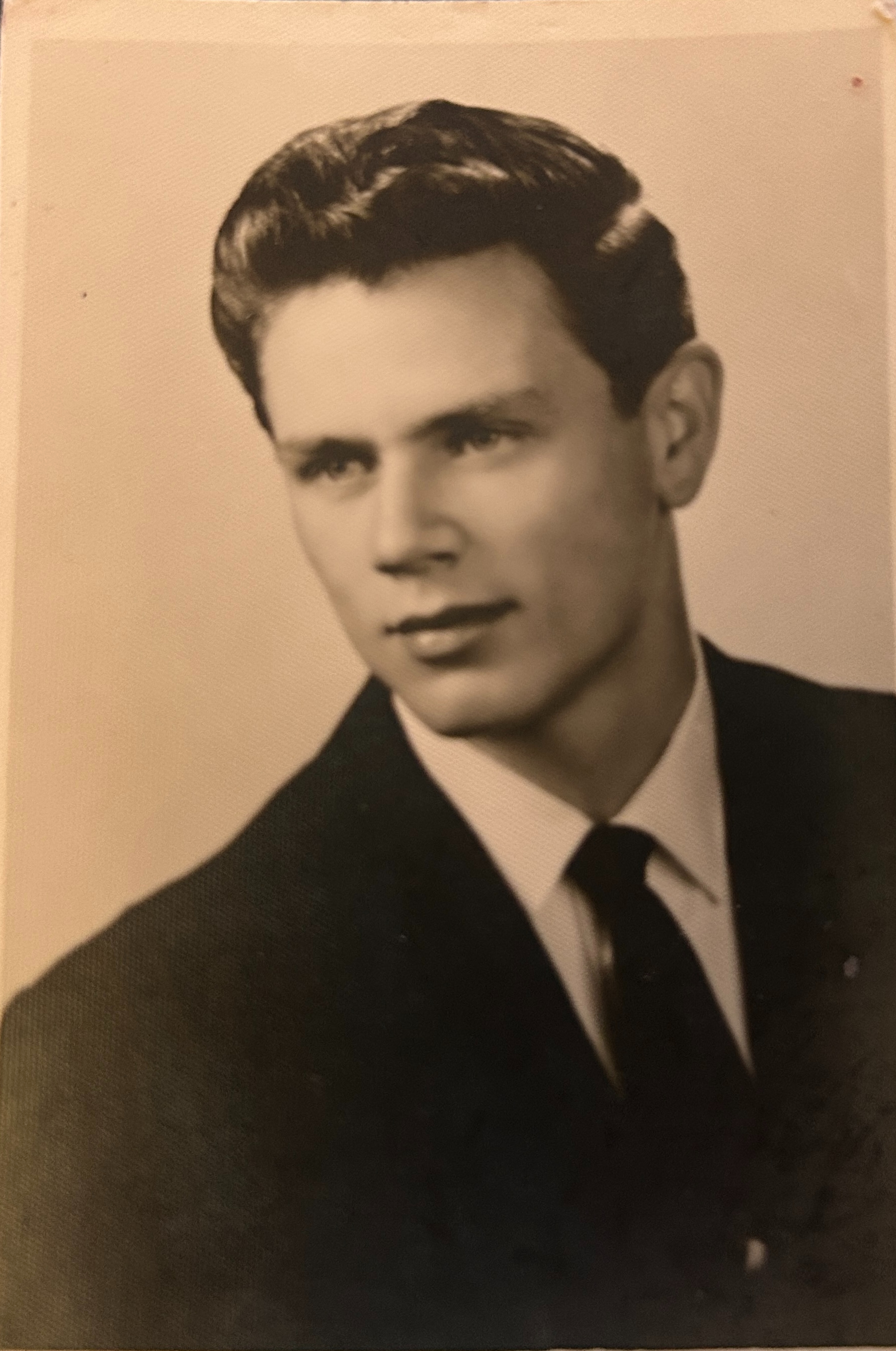
It is real now. I officially began querying agents on Thursday, March 14, the 113th anniversary of Grandpa Phil’s birth (and about three years later than I thought). Our project, going out into the world under the title Three Rivers Home, is a work of love. Love for my family. Love for a grandpa I never got to know in life, but found after his death. He never got to take me fishing or show me how to change a tire, but Philip Leo Brenckle, the gentle soul who grew from the scared little boy named Filippo Arturo Venezia, taught me how to catch a dream.

It’s a luxury he glimpsed but never grasped. Grandpa yearned to turn his talent for making Donahoe’s fruit baskets—topped by fantastic, complex bows—into a business. We’re alike in that way, Francesco, Phil, and me. Whether it’s tailoring, basket-making, or writing, using our structured creativity is the essence of freedom.

As I set out on the toughest leg of this journey, Grandpa — once again via my Aunt Mary Ann — let me know he’s watching and rooting along with the rest of the family.

Mary Ann and my uncle Buck live in the family home and have been remodeling it. The basement’s being turned into a full bathroom because, like so many Pittsburgh houses, it’s got a “Pittsburgh Potty” and shower. And, tucked under the steps leading from the basement to the first-floor kitchen is Grandpa’s workbench. It’s sat untouched since he died in 1964. The mysterious concertina, upon which he played only once in memory, belting out Louis Armstrong’s “Sweethearts on Parade,” is lodged in a cubby beneath its broad top, still scattered with baby food jars of nails, brackets, washers, and nuts. Little did we know the bench concealed a secret relic of Phil’s deferred dream.

On March 14, at about the same time I was composing query letters to my first two agents, Mary Ann and Buck pulled back the bench.

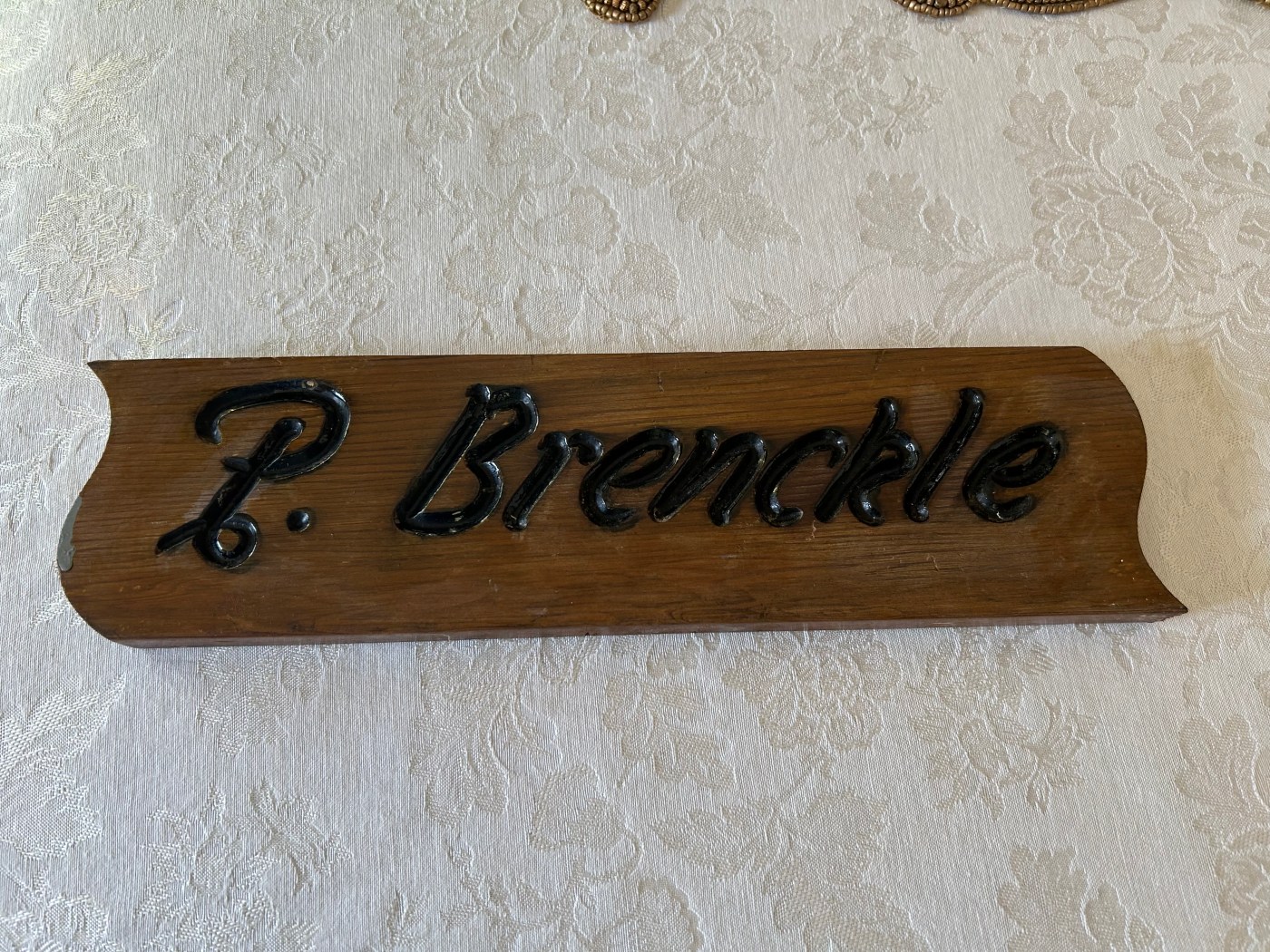
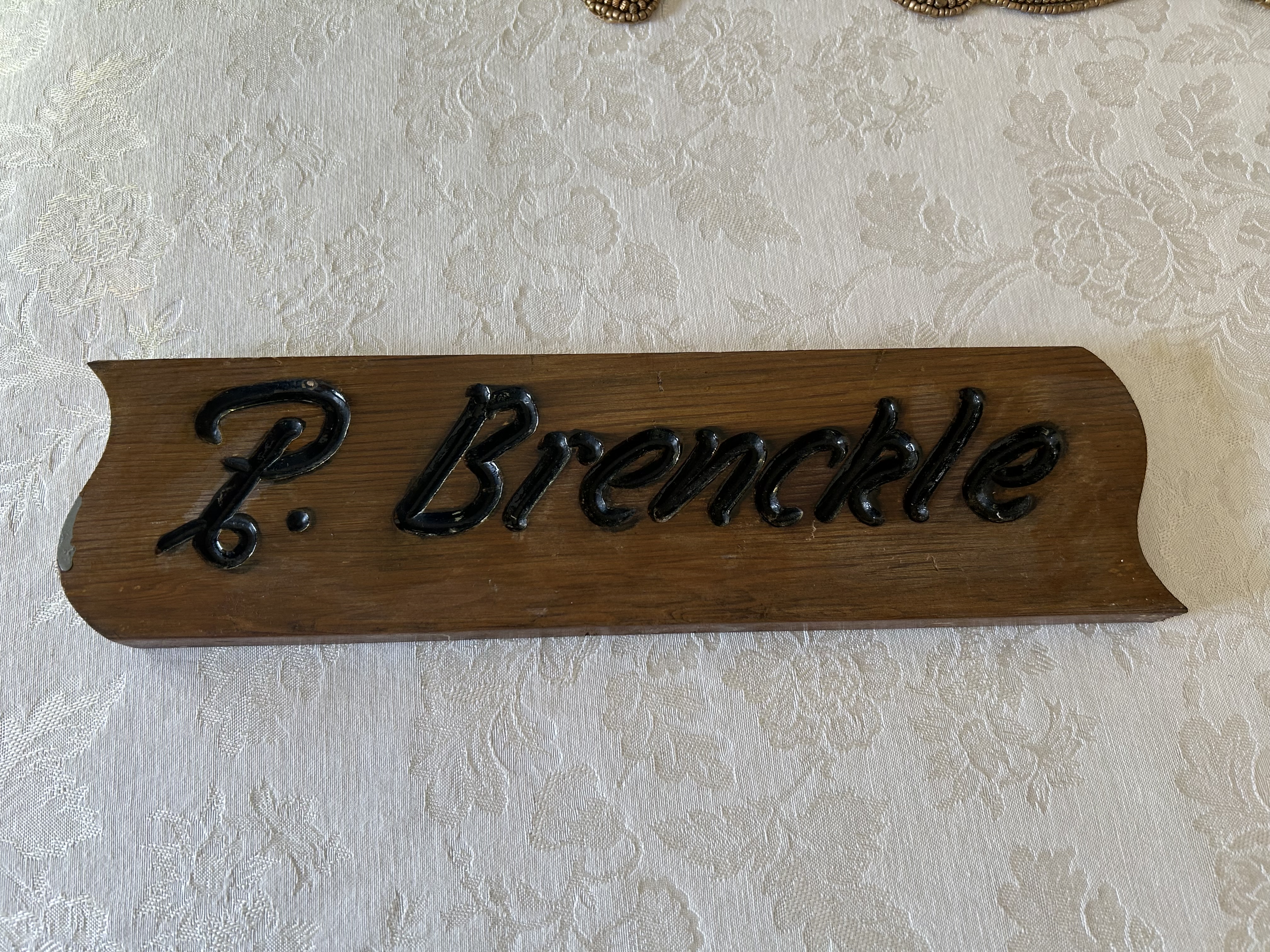
Behind it was this wood-burned sign, as close as Grandpa got to becoming the proprietor of his own fruit basket business, which he’d planned to start at the Brenckles’ Garden Center on Babcock Blvd.

My parents happened to be in Pittsburgh last weekend for an event, and Mary Ann presented it to them. Of course, it will go to my brother and grandpa’s namesake, where it belongs.

So, thanks again, Grandpa, for reminding us that you and Grammy are still watching and cheering for the next generation’s success.

The Things She Carried

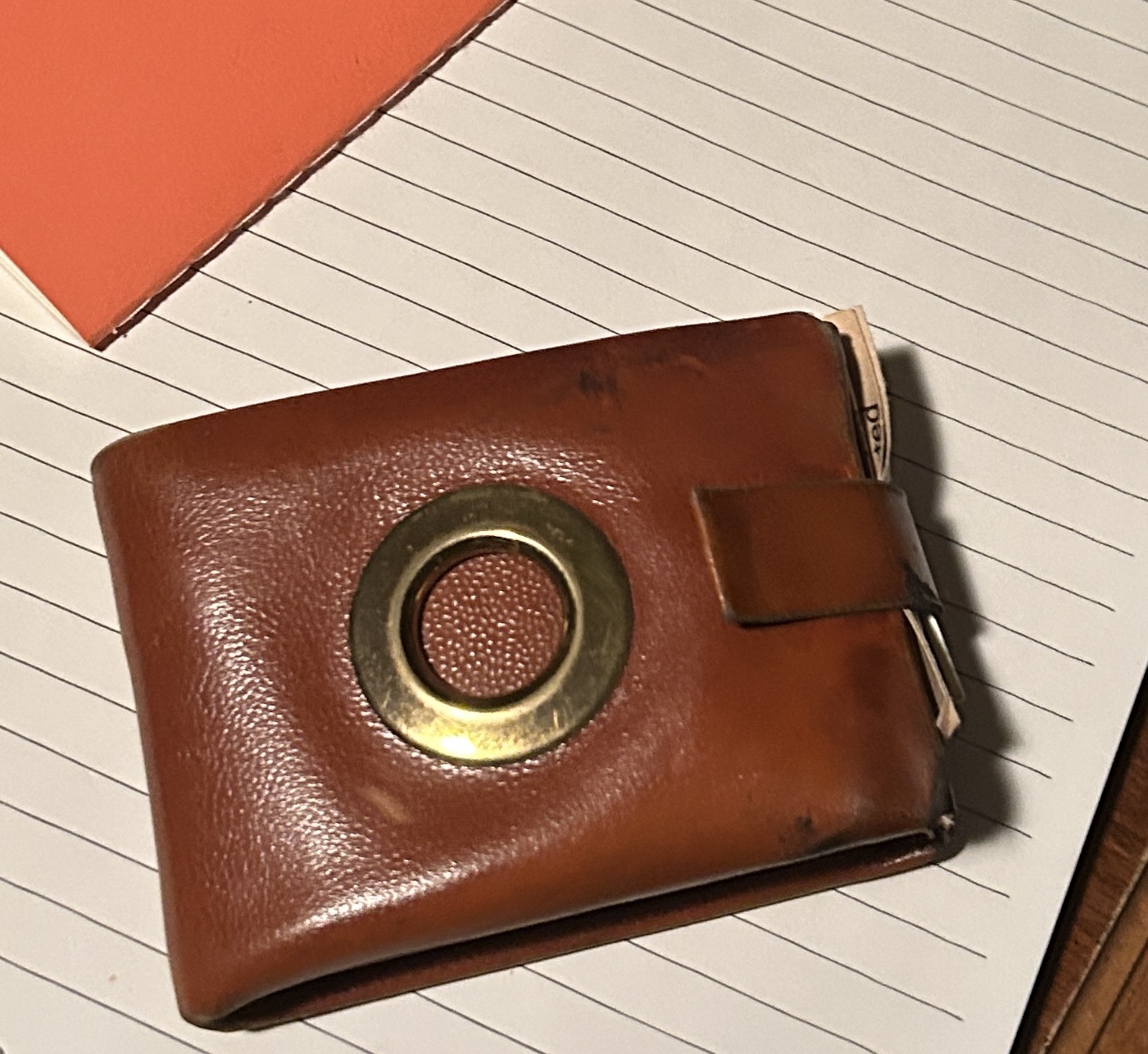
My Mom handed me a small, brown wallet, clasp tantalizingly closed as if its owner had just placed it on the nightstand.

“I figured you’d want this,” she said, “It was Aunt Mary Vee’s.”

Mary “Vee,” my great-aunt, Mary Venezia, was the last link to Grandpa Phil, Great-Uncle Joe, and their parents. As the oldest child, she had the clearest memories of nearly all their shared tragedies. By the time she died at 73, she’d outlived her parents and siblings despite a congenital hip defect and tuberculosis that settled in her bones with spine-twisting brutality.

I say nearly because, in 1920, Mary’s destiny diverged from her brothers’. When they were pulled, sick and starving, from Pasquale’s hovel in Pittock, Phil and Joe went into Allegheny County’s rudimentary foster care system while Mary was sent to the Sewickley Fresh Air Home. A cross between Shriner’s Hospital and St. Jude’s, it provided care to children 14 and younger, mostly with polio, tuberculosis, and orthopedic complications. Someone — possibly Mary’s caseworker Camilla Barr — was looking out for her and negotiated 15-year-old Mary a place there, paid for by the county.

Despite having her family and heritage severed repeatedly, Mary saved pieces of her fragmented past with tender, orderly ferocity. She preserved the only photograph of Francesco and Severina, Francesco’s memento mori pin, and her baby picture.

With an archivist’s practiced eye, I unclipped the wallet’s slim band.

My Dad’s face, forty years younger, stared back from a pair of newspaper clippings announcing promotions at Pittsburgh National Bank, followed by two of Dad’s business cards with elegant, Palmer-script notations indicating he was her emergency contact.

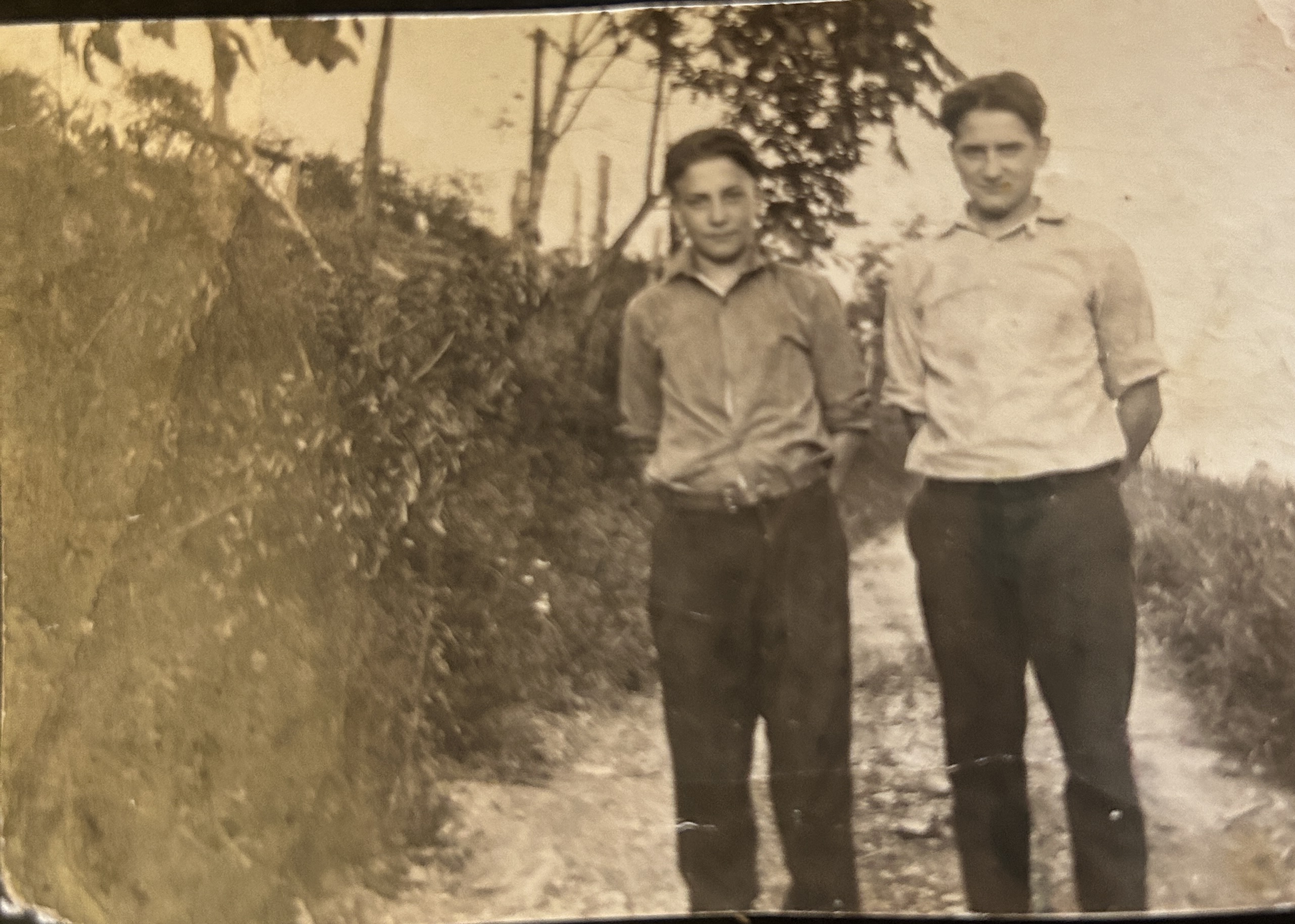
Next, to my surprise, was a photo of Joe and Phil. Taken the same day as another photo in my collection, I recognize the Brenckle farm lane in the background and conclude it was most likely after they’d returned from Bellaire. Their smiles are tighter, eyes shifting slightly left as if still on guard for danger. In faded pencil, Mary’d written on its back, “Phil and Joe in working clothes.”

Next came high school graduation photos of my Aunt Mary Ann and Joe’s children, Myrtle and Wayne; my cousin, Bryce, her first great-grand-nephew, at four months old.

Then, her social security (issued in 1970), health care (Blue Cross of Western PA), and voter registration (Republican) cards.

Finally, a small collection of strangers’ babies, graduation, and wedding photos. Every image, however, was marked with names, dates, and short descriptions. It was a reminder that Mary was not only a vital part of our family’s history but a sweet memory in so many others.

The 1951 Pittsburgh Press article about the Fresh Air Home noted that after healing, she’d remained there as a kindergarten teacher and was known to sit up nights holding the hands of new arrivals who missed their families.

Those little boys and girls remembered dear Miss Mary and wrote to her by the dozens over decades. At one point, we had a large bag filled with hundreds of black and white photos, clippings, and notes former Fresh Air residents sent. Babies, graduations, enlistments, and homecomings were all shared with the woman who’d been the friend they needed. I’d uncovered it in my parents’ closet at about age 10 and sifted through it endlessly. Several boys healed enough to be drafted into World War II. One sent photos from Eagle’s Nest, Berchesgarten, and several locations mentioned in Band of Brothers.

There were also photos of Mary and her Fresh Air friends having fun. After all, she was a young woman and emerged from three years of body casts with humor and an effervescent spirit. One letter preserved in the Bellaire stash included a note from Mary to Phil mentioning playing tricks on her doctor by stuffing newspaper in his shoes. Within the Fresh Air Home’s sprawling grounds, she strummed a ukelele, hosted little girls’ tea parties, and reenacted scenes from plays. Tragically, this cache fell victim to a basement flood and couldn’t be preserved, much like the Fresh Air Home itself.

Medicine and society moved from institutionalization to community care. The home shuttered in 1952, and Fresh Air’s wealthy benefactors gave Mary one final gift — a room at Friendship House, a genteel retirement home for upper-class ladies. However, her stay was contingent upon remaining mobile and self-reliant.

And for decades, she was. Until, one day, she wasn’t. The stately Sewickley Victorian, with her room on the top floor, was no place for a woman with severe spinal degeneration. A doctor convinced her surgery would save her mobility. Dad tried to talk her out of it, hearing chicanery’s quack a mile away. However, Mary, who’d fought valiantly for independence, decided to go down swinging. Complications predictably, fatally arrived.

Before she left this world, Mary learned my Mom was pregnant with me. She was overjoyed to know her favorite nephew, who looked so much like his father — the little brother she loved so much — would be a father himself. In a way, her precious, tiny collection of our family’s founding documents paved the way for all the research I conducted years later.

Mary, ever the teacher, also hid a final lesson in her tightly packed wallet. Its collection of family and friends reminds us that opportunities to treat others with kindness, mercy, respect, and love come to us all. Ripples of those choices reach untold generations, bearing memories that become blessings.

The Results are In

EthnicityCapture

My DNA test results are in (cue the Maury Povich music).

Actually, they came back a few weeks ago. The fact I’m posting now should tell you they were fairly unremarkable.

I knew my background regions all along. So, no surprises there. But what did shock me was how little of my DNA seems to come from Italy.

My profile states that I am 51 percent Western European, 24 percent Eastern European, 11 percent Great Britain and only 8 percent Italian. Whaaaat??? My grandpa was 100 percent Italian, as in, both his parents came from Italy and I’ve traced their roots very far back.

My grandmother was 100 percent Slovak. My other grandparents were 100 percent Polish and 98 percent Irish, with a little French Canadian thrown in because the Irish branch emigrated through Canada rather than the US.

I was expecting more Italian. But, ah, perhaps ol’ Fillipo Aristodemo had some other types of blood running through his veins!

I suppose it depended on what was in my spit that morning I took the test. Maybe the Italian portions were still sleeping.

I do take a lot of comfort in knowing that the majority of “me” is made up of the DNA most closely associated with my wonderful Grammy and my equally gentle, loving and kind Grandpa Krajenke (the Polish portion, if you couldn’t tell.)

I’ve been thinking a lot about how comforting this notion of inheritance is, at least for me and in my circumstance.

My mother-in-law, you see, is not doing well. She’s in the end stages of a progressive and ultimately fatal disease. My daughter, despite visiting her every week along with her Daddy, will only know her in pictures. However, there is a portion of her that will always be with her, that will always be with Jason, too.

My mother and father will be with me and with my daughter long after they are gone. A part of me will be with my daughter until the end of her days.

So, that means Grammy, and yes, Phil, are with me right now.

In physics, you learn that matter is neither created nor destroyed. With this test, it shows that is indeed the case. Lives echo on and on, catching the shore of the present day like the tide.

The 1940 Census is here!!

Census1940In business-ese, digging into something and spending a lot of time with it has a jargon-y phrase: taking a deep dive.

Well, I’ve been scuba-diving in the 1940 Census since it was released a few days ago.

It’s not exactly relevant to my writing project. It’s more like a roadmap for what happens next. If writing is about building a story arc, then these bits of information might help me craft scenes that allude to something that may not happen for a decade, but still matter. And besides, if I see where they go, it will help me stitch together the path of how they got there.

Of course I had to look up Grandpa first. What I found is interesting. He’d moved out on his own. He was listed as a lodger at a boarding house on Lockhart Street. It doesn’t exist anymore. The street dead-ends under bridge on the North Shore. It’s interesting that Grandpa’s noted as having zero education. I’d always heard he’d never gotten beyond 8th grade. But it looks like the census man spoke with him directly. Hmm. I was happy to see he worked all year in 1939 as a “produce man” (I suppose that could be an abbreviation for manager or it could just be produce man). But that he’d made only $1000 for all his effort. It sounds abominable, but in reality, it was on the lower end of middle class. I figure he had a lifestyle very similar to the one I had when I was single and working for my first newspaper. You were OK, but you really hoped no big bills or unexpected circumstances hit.

I wonder how he felt, living alone. I know that when I shut the door on the first day of living in my first apartment, I was so excited to be in charge of everything. Seems crazy now, of course. Haha. But I wonder how a guy, who’d spent his entire life making sure his family stayed together, felt to finally have a little bit of space for himself. His little brother was married. His sister was being taken care of at the Fresh Air Home. Maybe he just relaxed a little. I hope he had some fun. I hope he went out at night, had girlfriends and found something interesting to do in his spare time. Maybe that’s when he learned to play the concertina!

As we know, Joe and Ruth got married in 1932, so they were out of the Brenckles house, too. They lived in the rear of Ruth’s mother’s house. They had been living there at least five years, too. Joe is a laborer in Retail Food. I’m not sure if that means he’s slinging produce boxes at Donahoe’s with Phil, if he’s working for the Brenckles’ stand or something else.

I also looked up Marion, to see if she was still hanging on. She was. She was still in her house on Ruby Way, but with one more kid. And her brothers were still living with her, although it seems that this person who’s doing the correcting to their posts has made the boys Stephen’s brothers. Their names are also misspelled, but misspelled in the same way they were a few times in the fire coverage. Grost. In fact, the cursive D looks like a G, so the Ancestry algorithm could just be picking up the variation.

Either way, by the eve of World War II, it looks as if everyone had put the events of the past behind them. They were, after all, a solid 17 years behind. For grandpa, it was actually pretty significant. He was 16 when it happened. He was now moving into a future where he was a full lifetime removed from all the troubles of his childhood.

When I think about Phil’s life, sometimes I think of Andy Dufresne from the ‘Shawshank Redemption’ and the line in the movie, as Andy’s escaping: *Morgan Freeman voice* “Andy Dufresne, who crawled through a river of shit and came out clean on the other side…’

That’s about right.

For Grammy

WeddingPicsGrammy Helen would have been 95 today. I am missing her something fierce because I wish I could share all these amazing discoveries with her.

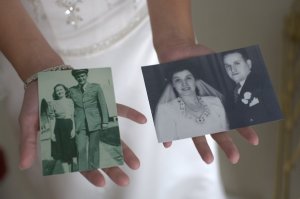
So, instead, I’m posting this. When Jason and I got married, I carried my bouquet. But all the way into the church, I carried these. A picture of Grammy and Grandpa on their wedding day, along with a picture of my mom’s parents, Doris and Richard Krajenke. They were married on the fly in California just before my grandpa shipped out for World War II, so that picture is the closest we have.

The picture of Helen and Phil came from Mary Ann, along with a necklace. The necklace was made out of the only piece of Grammy’s trousseau to survive — a faux pearl earring. It was one of the best and most meaningful gifts I’d ever gotten in my life. And you can imagine the tears of two dozen women when I read the sweet note she included out loud at my bridal shower. It was awesome.

Before she was Mom or Grammy, she was Helen Dorothy Spock, born in Uniontown, Fayette County, to Slovak parents. Her father, John Spock, ran a general store that was a popular destination for recent immigrants. Her mother, Mary, raised the kids and sometimes worked the meat counter.

Helen was the middle of seven children. She never said so, but in the subsequent years I’ve learned her childhood was not exactly a happy one. But she was extremely smart. She graduated the valedictorian of her class in Uniontown.

She came to Allegheny County because her parents refused to send her any sort of secondary schooling. So she moved to Dormont to live with one of her sisters, who was already married. She found work at Donahoe’s Market as a checkout and stockgirl.

And guess who was working the produce section.

Funny story. Apparently, Grandpa used to like to tease Grammy before he got the courage to ask her out. The story goes that Grammy hated overripe bananas. She loved almost-green ones. So, on her break, Grammy used to go back to produce and Phil would give her a banana. “I saved the old ones for you. Just like you like,” he’d always say. And she’d get so mad because she’d had told him over and over that she didn’t.

And of course, he totally did remember. He just liked to see her get feisty and then have a chance to make up to her.

They got married in October of 1943.

Well, that took a while

ProducestrikeCaptureOK, so four years’ hiatus wasn’t exactly what I had in mind when I last posted.

Buuuut, there’s been some major upheavals. Most of them pretty darn good. I moved back to the Harrisburg area and got a job with the main newspaper here, the Patriot-News. Jason got a job at the Sentinel in Carlisle. And oh yeah. We got married. 🙂

On the downside, my dad was seriously ill last year and hospitalized for some time. His being sick made me glad I’d done so much work on the family history. But it also made me realize that there was so much more to uncover.

I’d filled in the big blanks, but I want them all. Or, at least as many as I can.

Which is why, home alone tonight while Jason was on night shift, I started googling. I suppose February always gets me thinking about Grandpa. The anniversary of his death is this week. And with so many stones still unturned, I figured poking around wouldn’t hurt.

It’s not much, but it was so cool. Google has this amazing project where they’re scanning in old newspapers and you can search them. So, instead of microfiching it for hours, you can just google.

This is a news article about a produce strike in 1945. It was taking place in Pittsburgh right around the time my dad was born, actually. And Grandpa’s quoted because he was the only guy who’d thought ahead and ordered enough to get the store (Donahoe’s) through Tuesday.

Memorialized

The thing that’s always drawn me to newspapers is the sense of immortality. A hundred years from now, whether accidentally or on purpose, someone looking for information will find it, and find my name. Maybe they will like what they read. Maybe they will think it’s trite and old-fashioned. Either way, it’s part of history and, if there’s another girl, far into the future, searching for her roots, maybe something I wrote can help.

Which is why it means the world to me that my paper published the article based on my research. You can find the link here. I love what they did with the cover, using Grandpa’s picture. I grabbed a bunch of copies to send to Mom and Dad, give to Mary Ann, Arnetta — lots of folks.

Like the article says, I’ve learned so much in all these months researching. I feel I know so much more about Grandpa himself. I’ve learned about judgement and luck. About the things that should break you and don’t. About the power of humor, and family, and how this city, my city, can shelter and shun. I guess you could say I’ve learned a little more about what it means to be human.

And I’m not done. All of this has convinced me I need to write a book. And it has to be about Grandpa’s life. There’s one story in all of us. That’s what Harper Lee always said, right? This one’s mine.

So, I’ll search on and see where this tale takes me.

Answers

The long-awaited family reunion was a huge success.

Last weekend, my parents, Mary Ann and her husband Mike, Kristin, Bryce, me, Philip and Jason all made our way out to Hadley, PA, where Arnetta lives. Arnetta is the daughter of Anna Mae Brenckle, Raymond and Myrtle’s daughter.

It was funny for me because I looked at the Brenckles, who weren’t really all that different looking than all the rest of us (lots of dark hair, brown eyes, hearty appetites). But you could also see how the branch that belonged to “the Italian boys” (that’s how so many people remembered them, as “the Italian boys”)  was so different.

I met (or re-met) Brenckles of all ages. That was great, because I had several direct connections to people with clear memories of my grandfather — including Arnetta’s older sister.

As I sat with the two of them, another memory of the type of person my grandfather was floated up.

“I remember one time hearing a story from my mother,” Arnetta said. “From right after your grandparents got married. Your Grammy, bless her heart, she was so wonderful. But she didn’t know anything about running a house. Oh, none of us do when we get married. But she served dinner to your grandfather. And he said to her ‘Helen, look in my ear.’ All concerned, she starts looking in Phil’s ear and asking what’s the matter. ‘Do you see a noodle in there?’ he asks totally straight-faced. ‘No, Phil. I don’t.’ she says, totally serious. ‘Well, look again, because that’s the fourth time we’ve had chicken soup this week and I think the noodles are starting to come out of my ears.'”

I can feel the grin split my face. It’s nothing, really. No grand historic import to this story. But it’s an absolute lock on what kind of person my Grandpa Phil was. This was a man who grew up in an era, and possibly around people, who’d have knocked the pot out of Grammy’s hands and no one — not even her — would have thought it was wrong. But not only did he not treat her like that, his gentle humor made her not feel bad about herself. I wanted to hug him so bad. Heck. I wanted to hug Grammy again and laugh with her over the sweet memory she’d never seemed to find all those times I’d asked.

“Do you want me to bring down some pictures?” Arnetta asked.

I practically raced to the attic myself. The box held a bunch of loose photos and old frames. There were a lot of pictures we’d already had. The dapper picture of Grandpa in his 20s, straw boater in hand, dressed in a sharp gray suit. It’s a strange feeling, seeing “your” family picture in someone else’s house. But, obviously, they were family, too.

There were many others I hadn’t seen. Myrtle sitting on an upturned vegetable box at the stand on Smallman Street. Grandpa and Joe in coveralls, standing in front of a greenhouse they’d built. Promotional photos of the Brenckle farm trucks.

And onBrencklese picture that twisted my heart when I saw it. Phil and Joe in obviously-new suits, standing next to 8-year-old Anna Mae and 4-year-old Buddy, the Brenckles’ biological son.

“It must have been taken right after the adoption was finalized,” Arnetta said. Sure enough, another photo, of all the kids in the same clothes, standing in front of a large, black car on the Brenckle farm, seemed to verify it.

There were pictures of the old Brenckle farmhouse and the new. The old one burned down, but they rebuilt. One of the guys I met tonight lives there now.

“You know, guys, there’s one thing I’ve always wanted to know. Why?” I asked. “Why them?”

Arnetta and her sister explained that the Brenckles took in a lot of kids for farm work. They took in a lot of adults, too. It’s likely that their being as young, but as old, as they were at the time they came to the farm made them perfect candidates to watch Anna Mae and Buddy.

“Oh,” I said. It sounded like a work arrangement.

“But there was something about your grandfather and his brother,” Arnetta said. “They were special. They had good senses of humor. They were hard workers.”

BeforePic“They were helpful and handy?” I said.

Remember, Ray and Myrtle adopted them, they said. They didn’t have to. They could have just let them live on the farm, because there were a few other kids and older guys that did. They made them family, and that had to mean something.

It wasn’t the grand, movie-ending I’d hoped for. “You’re the missing piece of our family” and all that. Emotions, I suppose, weren’t the same in 1922 as they are now.

And I learned one more thing. Mary was always welcome. She was never adopted, but she was still a large part of the family. It seems cruel, but for a working farm, her disability would have been difficult; and again, feelings about those types of things were very different from today. Raymond, in fact, used to drive over to the Fresh Air Home, pick Mary up and bring her for the weekend. She’d sit in the kitchen and snap green beans or dry dishes. And after all the work was done, the three siblings could spend time together.

That, I imagine, had to mean everything.

Blog at WordPress.com.

Up ↑